
Indeed, every thunderstorm redefines the vulnerability of an industrial site to lightning. This natural phenomenon, though familiar in Europe and Africa, can cause serious or fatal injuries and destroy infrastructure in an instant. For engineers and specialized installers, understanding lightning strike mechanisms and their consequences is essential for adopting innovative and robust solutions. This article offers a practical overview of the risks, devices, and essential standards for strengthening your electrical safety.
Table of Contents
- Defining lightning risk and its impacts
- Identify the available protective devices
- Integrate regulatory standards and obligations
- Evaluate the technical and installation criteria
- Anticipate costs, maintenance, and common errors
Key lessons learned
| Point | Details |
|---|---|
| Understanding the risk of lightning | The risk of lightning strikes depends on geography and structure, requiring precise assessment for adequate protection. |
| Adopt protective measures | Use lightning rods, down conductors and surge arresters to reduce the impacts of lightning and protect infrastructure. |
| Compliance with standards | Comply with IEC 62305 and NF C 17-102 standards to ensure the legal and technical safety of your installation against lightning risks. |
| Importance of maintenance | Preventive maintenance and regular checks are essential to ensure the efficiency of installations and avoid significant costs in the event of an incident. |
Defining lightning risk and its impacts
Lightning is a powerful electrical discharge that occurs during thunderstorms, caused by an imbalance of electrical charges in clouds. Understanding this natural phenomenon is the first step in implementing appropriate protection for your installation.
Furthermore, the risk of lightning strikes depends on several geographical and structural factors. Open areas, elevated locations, and regions with high thunderstorm activity present a greater threat. Your geographical location therefore determines the level of protection required.
Furthermore, lightning causes considerable damage affecting both infrastructure and living beings. Direct strikes cause immediate damage, while indirect effects often remain invisible and are just as devastating.
In addition, the main impacts of lightning include:
- Fires : blazes in homes, industrial buildings or forests
- Electrical surges : destruction of electronic equipment and computer systems
- Structural damage : cracks, structural deformations, partial collapses
- Injuries or death : direct impact, severe burns, cardiac arrest
- Electromagnetic interference : malfunction of communication networks
It should be noted that injury mechanisms vary depending on the type of contact. Direct strike, lateral strike, and step voltage represent different ways in which lightning impacts living beings and infrastructure. Each mechanism requires a specific protection approach.
In general, here is a summary of the mechanisms of lightning strikes and their main consequences:
| Lightning strike mechanism | Typical target | Typical damage |
|---|---|---|
| Direct collision | Structure, person outdoors | Instant deterioration, serious injuries |
| Side impact | Proximity to struck object | Injury caused by conduction or arc |
| Step tension | Individual near impact | Cardiac arrest, localized burns |
| Induced wave | Electronic equipment | Power surges, malfunctions |
In practice, the duration of a lightning discharge is extremely short—only a few milliseconds. Yet, the current intensity can reach several hundred thousand amperes, causing instantaneous and irreversible damage.
In practical terms, your sector of activity also influences the risk. Industrial facilities, telecommunications, agricultural installations, and public buildings face specific threats. Accurately identifying your risk profile allows you to select the appropriate protection solutions.
Historical data shows that lightning regularly strikes the same areas and types of structures. A site audit reveals these patterns and guides the sizing of protection systems. Understanding the specific risks helps avoid costly oversizing and dangerous under-protection.
It should be noted that lightning causes considerable damage every year. Appropriate protection drastically reduces these risks and safeguards your property.
In reality, Pro Tip: Document all lightning events that have occurred on or near your site in the last five years—this local history is valuable for assessing your actual risk level.
Identify the available protective devices
Indeed, effective lightning protection relies on several components working together. Each element plays a specific role in capturing, conducting, and dissipating lightning energy. Understanding these mechanisms helps you develop a suitable strategy.
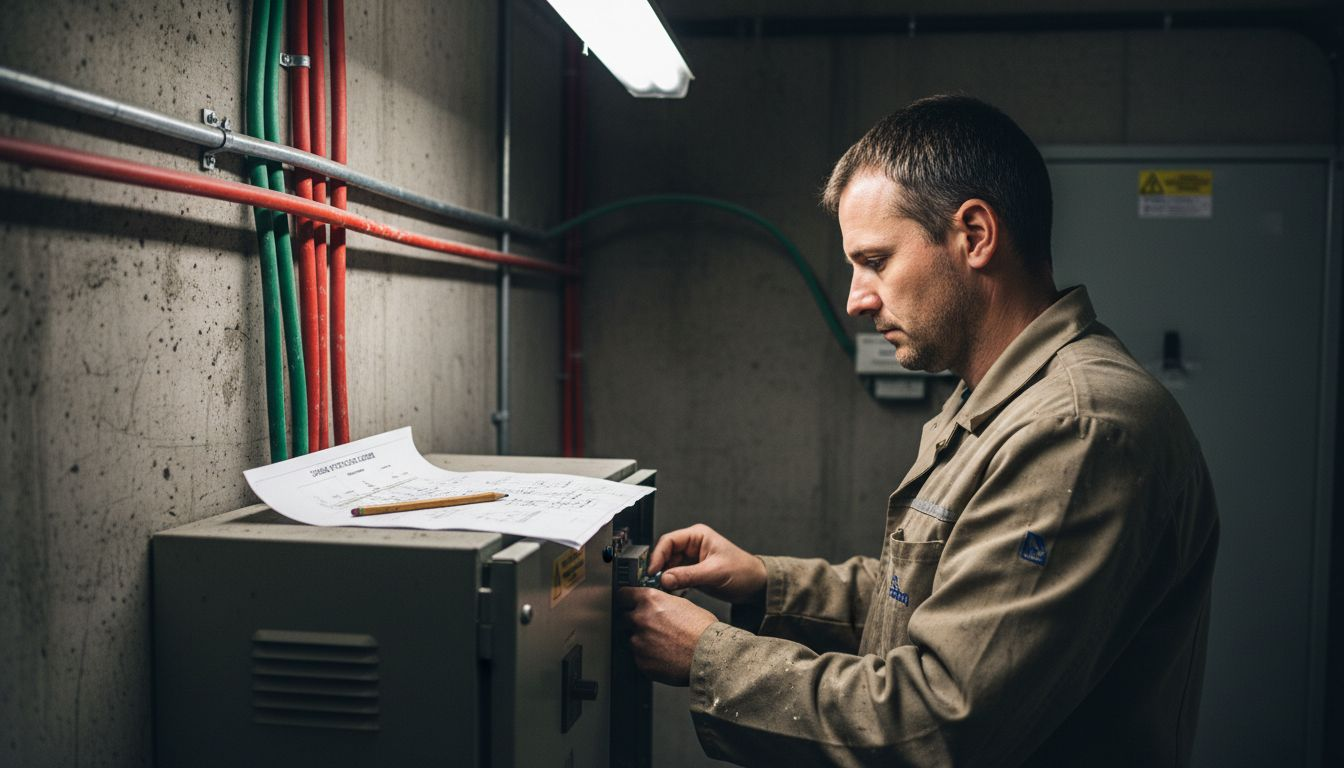
However, lightning rods are the first line of defense. They capture direct strikes and channel the current to the ground. There are several types of lightning rods, each offering different levels of protection depending on your risk level.
However, down conductors form the safe path for the current. The efficient conduction of lightning current to ground depends entirely on the quality and sizing of these conductors. A poor down path creates dangerous hot spots.
Conversely, grounding systems dissipate lightning energy into the ground. A good grounding system reduces voltage and protects structures and people. The required size varies depending on your local geology and soil type.
However, surge protectors protect against induced overvoltages. Type 1, 2, and 3 surge protectors offer different levels of protection depending on their location in the electrical circuit. Cascade protection uses multiple surge protectors for optimal effectiveness.
For example, this table compares protective devices according to their function and key advantage:
| Device type | Main function | Key advantage |
|---|---|---|
| Lightning rod | Capture the discharge | Protects against direct impacts |
| Downhill driver | Direct the current towards the earth | Prevent arc propagation |
| Grounding | Dissipate energy into the ground | Reduces residual tensions |
| Lightning arrester | Filtering electrical surges | Protects sensitive devices |
Specifically, here are the main categories of devices:
- Direct capture : lightning rods, early warning rods, sensing conductors
- Conduction : down conductors, Equipotential Spark Gap, earth bars
- Dissipation : grounding points, buried electrodes, grounding systems
- Indirect protection : low-voltage surge arresters, protective circuit breakers, filtering systems
In particular, the selection depends on your type of installation. An industrial building, a photovoltaic farm, and a telecommunications tower do not require the same approach. Each case requires a specific needs analysis.
In fact, IEC 62305 and NF C 17-102 standards guide the selection of devices. These standards define the selection criteria, installation distances, and performance requirements. Compliance with these standards guarantees compliant and recognized protection.
In this respect, the intelligent combination of these devices creates robust protection. No single element is sufficient; it is their interaction that ensures your security. A flawed strategy at a single point compromises the entire system.
In this context, good lightning protection combines capture, conduction, and dissipation in harmony. Each component must be sized to support the entire system.
In other words, Pro Tip: Always request an initial technical audit to identify existing devices and determine necessary improvements—optimal protection starts with knowing your current situation.
Integrate regulatory standards and obligations
In other words, lightning protection is not optional—it's a legal requirement in most jurisdictions. Standards define minimum safety criteria and everyone's responsibilities. Ignoring these requirements exposes you to legal and insurance risks.
First, IEC 62305 is the international standard. It applies to all buildings and installations in Europe and Africa. This standard requires a lightning risk assessment before sizing your protection system.
Next, the NF C 17-102 standard complements IEC 62305 in France. It details the technical requirements and control methods. Compliance with this standard is mandatory for new installations and renovations.
Finally, your country of residence may have additional requirements. In Africa, some countries impose strict standards for critical facilities. Check with your local regulatory body before you begin.
It should be noted that regulatory obligations vary depending on your sector of activity:
- Public buildings : mandatory compliance, regular inspection, documented maintenance
- Industrial facilities : comprehensive risk assessment, proportionate protection, annual reports
- Telecommunications : strict standards, required redundancy, periodic testing
- Agricultural sector : protection of buildings, tanks and sensitive equipment
- Medical sector : protection of critical equipment, guaranteed service continuity
Note that civil liability requires you to maintain your protection. If a lightning strike causes damage, your insurance company may refuse coverage if your system does not meet the standards. A compliance audit is therefore a wise investment.
Indeed, periodic inspections are mandatory. Most standards require an annual check and maintenance after each lightning strike. LPS Manager facilitates compliance with these obligations through automatic reminders and comprehensive documentation.
Therefore, comprehensive documentation must accompany your installation. Electrical diagrams, test reports, certificates of conformity, maintenance history—all of this must be kept and readily accessible. This traceability proves your compliance in the event of an incident.
Furthermore, the penalties for non-compliance can be severe. These include administrative fines, criminal liability in the event of damage, denial of insurance coverage, or a ban on operating certain equipment. Prevention is always less expensive than the consequences.
Furthermore, compliance with standards protects your property, your civil liability, and the safety of your occupants. It is an obligation, not an option.
In addition, Pro tip: Ask your installer for an IEC 62305 or NF C 17-102 certificate of conformity signed by a recognized body—this document will be your proof of conformity in the event of a claim or regulatory inspection.
Evaluate the technical and installation criteria
Note that each lightning protection installation requires a precise assessment based on measurable technical criteria. These criteria ensure that your protection corresponds exactly to your actual level of risk. A generic approach never works.
In general, arisk analysis is the mandatory starting point. The IEC 62305 standard details the technical criteria for assessing your lightning risk and determining the required level of protection. This analysis considers the geography, the density of lightning strikes, and the potential consequences.
In practice, the key parameters of the installation include the building's height, surface area, geometry, and composition. A steel industrial building does not require the same approach as a wooden house. Each material offers different conductivity.
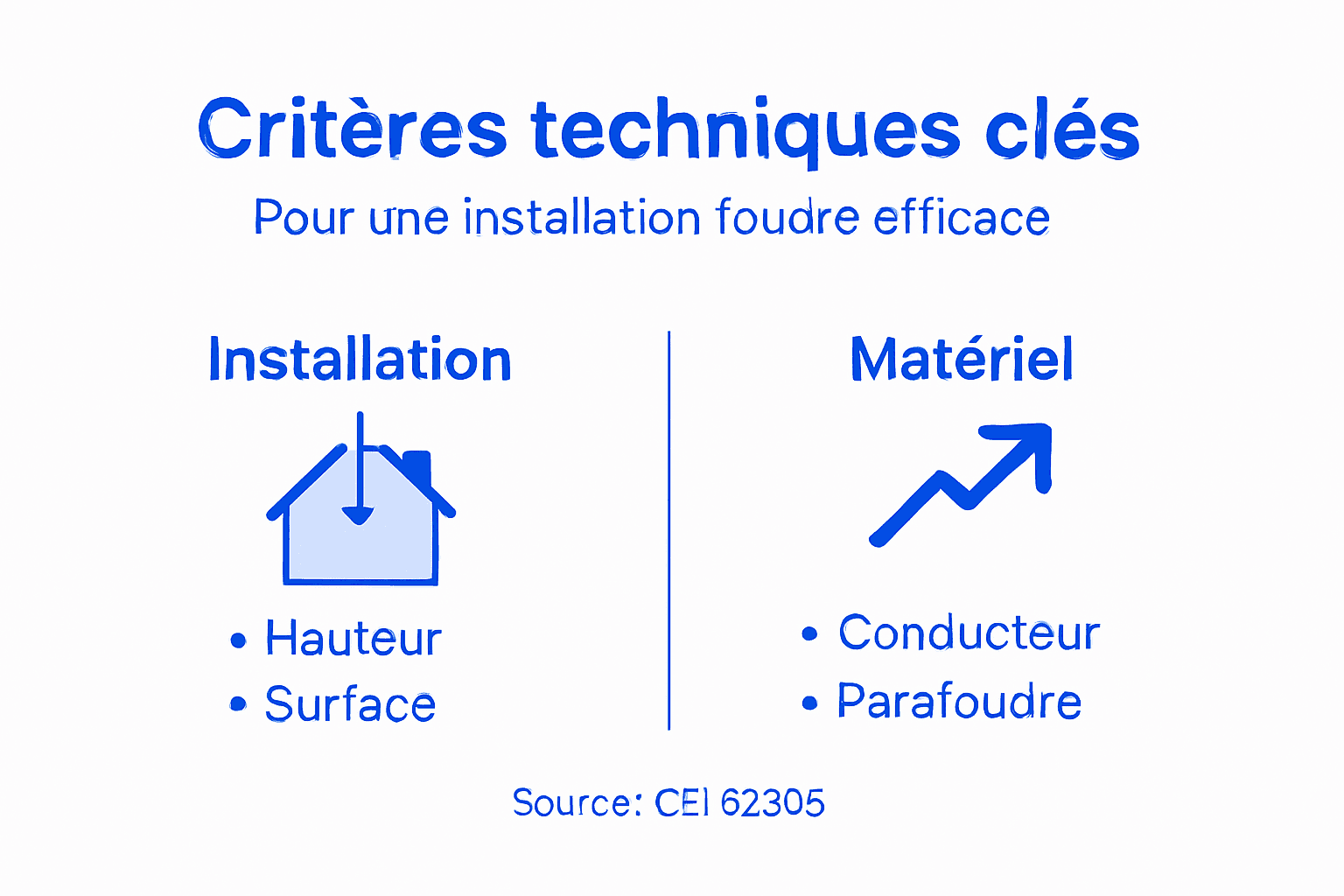
In practical terms, the sizing of the conductors depends on the expected nominal current. The conductors must withstand thousands of amps without melting or creating hot spots. Thermal and mechanical resistance are essential for the system's lifespan.
Remember that the distance between lightning rods directly affects protection. Excessive spacing leaves exposed areas. The IEC 62305 standard precisely defines these distances according to the chosen level of protection.
It should be noted that the priority technical criteria are:
- Nominal discharge current : minimum required for each surge arrester (example: In ≥ 5 kA for type 1)
- Protection level (Up) : maximum permissible voltage (example: Up ≤ 2.5 kV for type 1)
- Grounding resistance : ideally aim for < 10 Ω, never > 50 Ω
- Length of down conductors : minimal and direct to reduce inductance
- Spacing of the intake points : depending on the level of protection, typically 10 to 20 meters
In reality, cascading surge protectors protects sensitive equipment. A Type 1 surge protector at the top absorbs the main energy, while Types 2 and 3 downstream protect your electronic devices. This tiered strategy ensures optimal protection without overloading the system.
Indeed, theinstallation's location determines accessibility for maintenance. Rooftop lightning rods must remain visible for inspection. Down conductors must not be hidden behind inaccessible facades.
The site's configuration influences the choice. A multi-building site, sloping terrain, or proximity to trees require specific studies. There is no truly standard installation.
Technical precision during sizing avoids unnecessary costs and dangerous gaps. Every meter, every amp counts.
Pro tip: Request a full technical study with detailed diagrams before installation—this document becomes your reference for maintenance, compliance, and in case of a claim.
Anticipate costs, maintenance, and common errors
Lightning protection requires an initial investment and recurring maintenance costs. Anticipating these expenses avoids surprises and ensures long-term protection. Neglecting maintenance is the most costly mirod in the long run.
The initial cost varies depending on the type of installation and your risk level. A small building costs less than a photovoltaic farm or a factory. A risk analysis precisely determines the budget required for effective protection.
Regular maintenance is mandatory and non-negotiable. Regularly checking the integrity of lightning rods and conductors prevents costly failures. Defects, breaks, or oxidation must be corrected quickly before they cause damage.
Frequent errors seriously compromise your protection. Improper grounding, failure to maintain separation distances, or neglecting periodic inspections create vulnerable areas. These avoidable mirods are costly in terms of repairs and liability.
The most common mirods to avoid include:
- Poor grounding : resistance > 50 Ω drastically reduces efficiency
- Incorrectly sized conductors : thermal overload during an impact
- Poorly spaced lightning rods : shadow zones leaving buildings exposed
- Lack of maintenance : oxidation and wear destroy the system
- Failure to comply with standards : loss of insurance coverage in the event of a claim
- Poorly chosen surge protectors : insufficient protection of sensitive equipment
Predictive maintenance detects problems before failure. Anticipating issues to better protect means regularly inspecting and testing equipment and maintaining detailed records. LPS Manager facilitates this monitoring with automatic reminders.
Post-strike inspections are critical. Never neglect a thorough check after a lightning strike—internal damage can cause future failures. An incomplete inspection voids your insurance coverage.
The annual maintenance budget typically represents 5 to 10% of the initial cost. This is a minimal investment compared to the damage caused by a disaster. Data or equipment loss is infinitely more expensive.
Staff training reduces operational errors. Your team must understand warning signs and emergency procedures. Proper training is essential to ensure continuous protection.
Neglecting maintenance transforms an effective protection system into a non-functional one. Maintenance costs little; damage is extremely costly.
Pro tip: Integrate lightning maintenance into your annual calendar just like electrical control—use LPS Manager to schedule checks and maintain complete traceability of each intervention.
Choose reliable, connected lightning protection tailored to your needs
Faced with the specific risks associated with lightning, it is essential to adopt a solution that combines technical performance with intelligent monitoring. To effectively address the challenges identified in this article, particularly the need for proactive maintenance and remote monitoring, LPS FRANCE offers a complete range of lightning rods and systems linked to the LPS Manager. Discover devices designed to capture and analyze each strike, ensuring optimal protection while reducing costs related to unforeseen events.
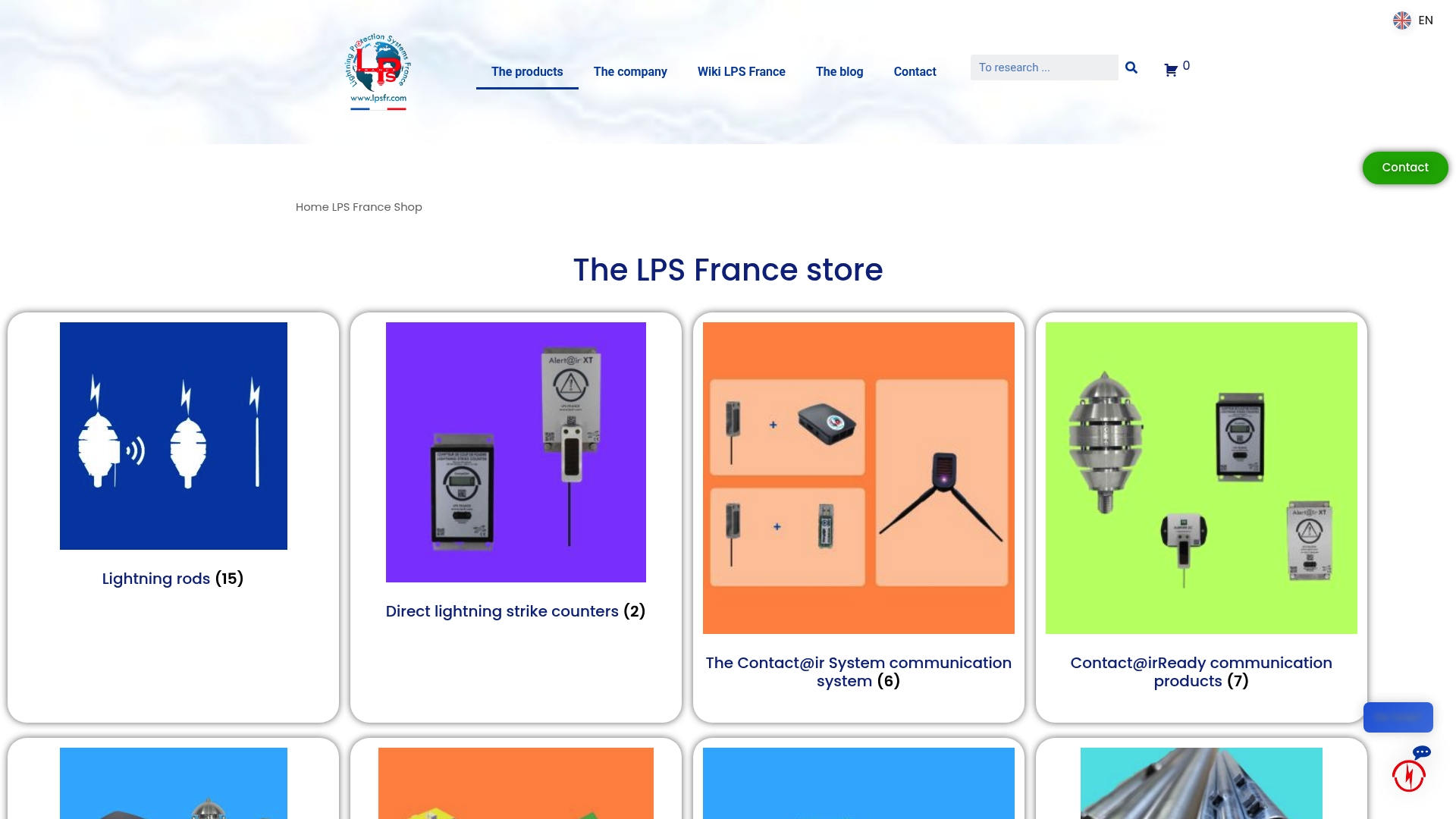
Take the initiative today by exploring our solutions on the Direct Lightning Protection (Lightning Rod). Combine them with our innovative communication and diagnostic systems for unparalleled traceability and centralized management. Leave nothing to chance; act now to ensure the safety of your installations with our proven expertise. Visit our online store now to customize your lightning protection.
Frequently Asked Questions
What is the role of lightning rods in protection against lightning?
Lightning rods are designed to capture lightning strikes and direct the electrical current to the ground, thus protecting structures from direct damage.
What are the differences between the different types of surge protectors?
Type 1, 2, and 3 surge arresters offer different levels of protection depending on their location in the electrical network. Type 1 is for upstream protection, while types 2 and 3 filter surges at lower levels.
How can I assess the risk of lightning strike for my installation?
The IEC 62305 standard provides a framework for analyzing lightning risk, taking into account factors such as geography, impact density and potential consequences.
Why is it important to comply with standards when installing lightning protection devices?
Complying with standards such as IEC 62305 and NF C 17-102 is crucial to ensure effective protection, avoid legal penalties and ensure your insurance coverage in the event of a claim.