
Les installations de protection contre la foudre échouent souvent aux audits à cause d’une mauvaise gestion post-impact. De nombreuses installations échouent à l’audit à cause d’une mauvaise gestion post-impact révèle que la majorité des non-conformités provient d’un suivi défaillant. Pour les ingénieurs et installateurs cherchant à garantir la sécurité et la conformité selon IEC 62305 et NF C 17-102, une méthode rigoureuse et des outils connectés deviennent indispensables. Ce guide détaille comment réaliser un audit complet et fiable.
Table des matières
- Prérequis et outils nécessaires pour un audit conforme
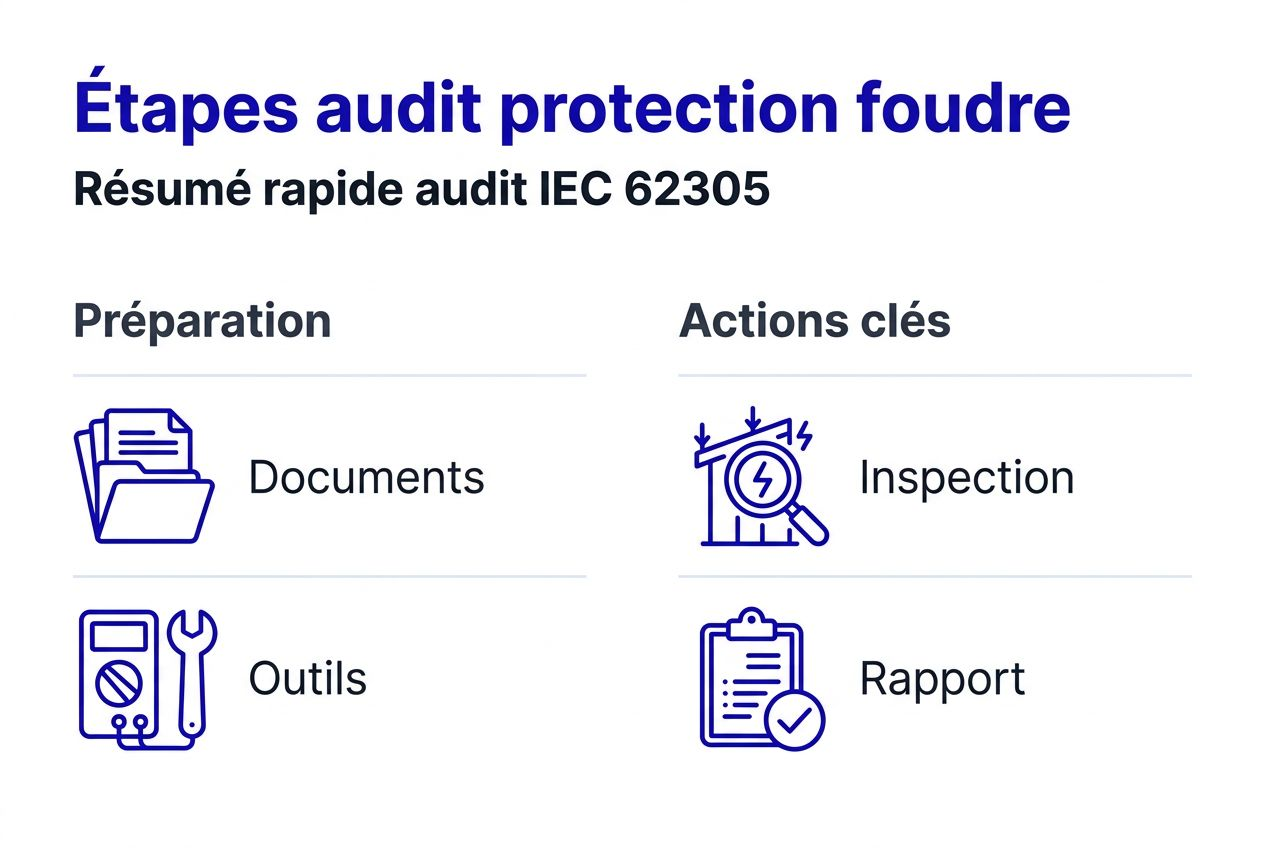
- Étapes pratiques pour auditer une installation de protection contre la foudre
- Erreurs fréquentes et solutions lors de l’audit
- Bénéfices attendus et indicateurs de succès d’un audit
- Conclusion et perspectives d’amélioration continue
- Découvrez les solutions LPS France pour vos audits protection foudre
- Foire aux questions sur l’audit de protection contre la foudre
Points clés à retenir
| Point | Details |
|---|---|
| Audit selon IEC 62305 nécessite inspection visuelle et diagnostic fonctionnel | Vérification physique complétée par tests électriques et supervision connectée pour conformité totale. |
| Outils Contact@ir et LPS Manager essentiels pour traçabilité | Diagnostic à distance, alertes temps réel et historiques assurent maintenance préventive efficace. |
| Respect strict des étapes pour conformité garantie | Protocole rigoureux du contrôle documentaire à la génération de rapports normatifs évite rejets. |
| Erreurs courantes éliminables par protocole adapté | Oubli post-impact, confusion diagnostic local limité versus supervision étendue, absence consignation systématique. |
| Suivi post-impact crucial pour sécurité continue | Compteurs communicants et alertes automatiques déclenchent vérifications obligatoires sans délai. |
Prérequis et outils nécessaires pour un audit conforme
Réussir un audit conforme IEC 62305 demande d’abord une maîtrise approfondie des normes IEC 62305:2024 et NF C 17-102:2011. Ces référentiels définissent les niveaux de protection (LPL), les zones à protéger, les exigences de continuité électrique et les contrôles obligatoires. Sans cette connaissance, impossible de valider les critères critiques lors de l’inspection. Chaque installation doit également respecter les normes IEC 50164 pour les composants individuels.
Côté équipement, vous aurez besoin d’outils matériels spécialisés. Pour les installations communicantes (gamme Paraton@ir), le système Contact@ir + Rout@ir permet de gérer jusqu’à 999 appareils en temps réel avec alertes et historiques. Cette architecture offre une portée de 300 mètres en RF 868 MHz et historise localement avant remontée cloud. Pour les diagnostics ponctuels, Contact@ir + Dongl@ir couvre 80 mètres sans nécessiter internet, idéal pour sites isolés. Contact@ir MD utilise une eSIM internationale pour supervision via réseau cellulaire 4G/3G/2G, envoyant alertes sans temporisation et données toutes les 12 heures. Pour paratonnerres non communicants Ellips, Test@ir effectue un diagnostic filaire.
L’application LPS Manager centralise toute la gestion. Elle consigne diagnostics, génère rapports conformes, déclenche alertes temps réel et archive données pour traçabilité réglementaire. Les éditions varient : Free pour création dossiers et alertes basiques, Data (2,99 €/mois) pour historiques détaillés, Pro (9,99 €/mois) pour rapports illimités, Expert (29,99 €/mois) pour branding, Enterprise (sur devis) pour API et intégration BMS/SCADA. Le guide protection foudre 2026 critères architectures recommandations détaille ces architectures.
Avant toute intervention, vérifiez les conditions d’accès physique. Sécurisez zones à risque (toitures, pylônes), préparez EPI appropriés, et identifiez contraintes site. Sur installations multisites industrielles, cartographiez équipements à auditer. Comprenez la différence fondamentale : équipements communicants Contact@ir Ready permettent supervision distante continue, tandis que paratonnerres classiques requièrent intervention physique systématique. Pour sécuriser infrastructures protection foudre, combinez inspection terrain et télémétrie.
Conseil de pro : Préparez un tableau récapitulatif avant chaque audit listant référence équipement, date dernière vérification, nombre impacts enregistrés et état dernier diagnostic. Cela accélère repérage anomalies terrain.
| Outil | Usage principal | Portée/Connectivité | Architecture recommandée |
|---|---|---|---|
| Contact@ir + Dongl@ir | Diagnostic ponctuel nomade | 80 m RF, USB Android | Sites isolés, contrôles programmés |
| Contact@ir + Rout@ir | Supervision continue multipoints | 300 m RF, internet Wi-Fi/Eth/mobile | Sites industriels, multi-bâtiments |
| Contact@ir MD | Autonomie cellulaire sans infrastructure | 4G/3G/2G eSIM | Multi-sites dispersés, réseau IP restreint |
| Test@ir | Contrôle filaire Ellips/Contact@ir Ready | Filaire sur site | Installations non communicantes |
| LPS Manager | Gestion centralisée rapports/alertes | Cloud multi-plateforme | Tous audits, traçabilité normative |
Retrouvez l’ensemble des solutions sur LPS France protection foudre pour équiper vos audits.
Étapes pratiques pour auditer une installation de protection contre la foudre
1. Préparation documentaire et configuration dispositifs
Commencez par rassembler plans installation, certificats conformité, historiques maintenance et rapports audits antérieurs. Créez ou actualisez dossier dans LPS Manager en enregistrant chaque équipement Contact@ir Ready avec numéro série et certificat authenticité. Cette étape active garanties et historisation. Configurez récepteurs Rout@ir ou applications mobiles selon architecture retenue. Vérifiez couverture RF ou réseau cellulaire sur zones critiques.
2. Inspection visuelle détaillée paratonnerres, conducteurs, mise à terre
Inspectez physiquement chaque paratonnerre. Vérifiez absence corrosion, déformation, connexions desserrées ou traces impact. Contrôlez continuité conducteurs descente sur toute longueur : fixations, soudures, raccords doivent respecter distances minimales et sections normatives. Examinez prises terre, connexions équipotentielles et tests résistivité sol récents. Une inspection visuelle est nécessaire mais insuffisante, un diagnostic fonctionnel reste requis pour vérification complète selon IEC 62305.
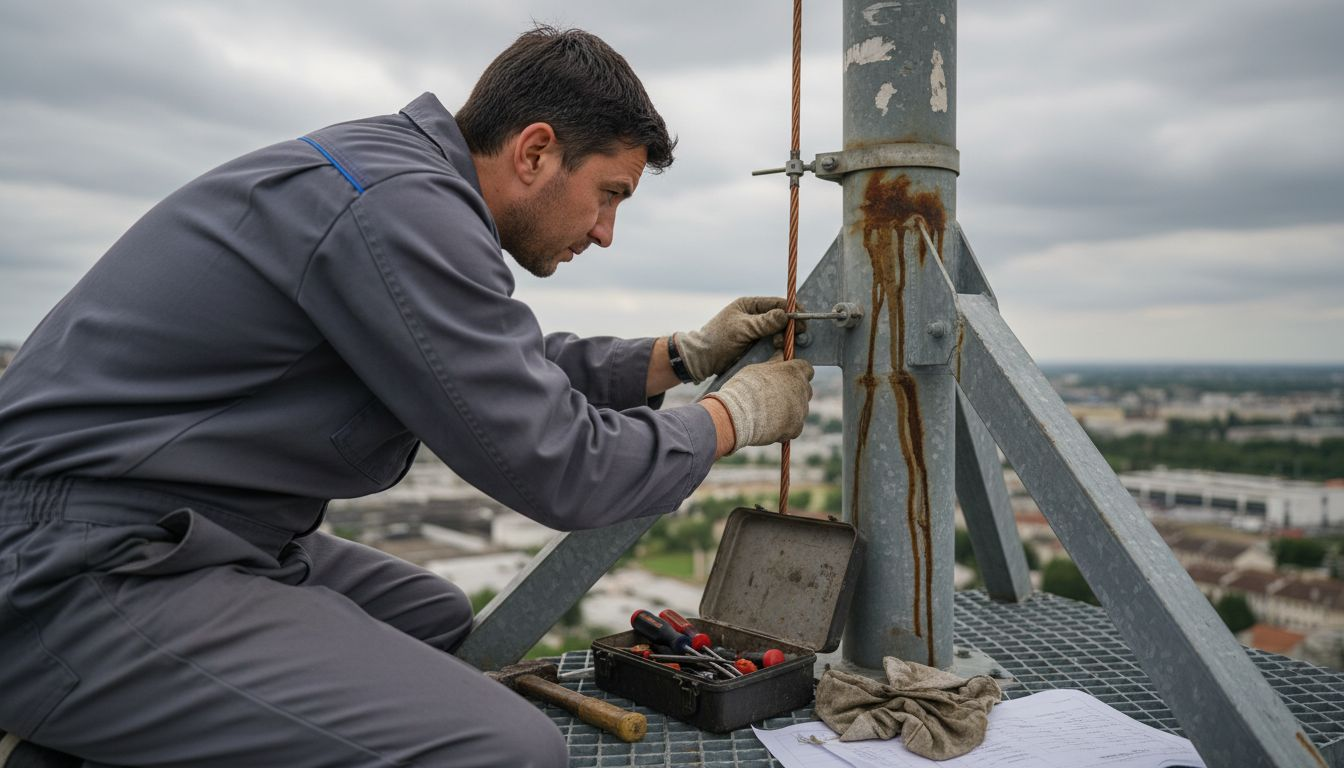
Consultez le guide détaillé des composants protection foudre pour identifier pièces critiques.
3. Contrôle filaire avec Test@ir pour équipements non communicants
Sur installations Ellips sans module communicant, utilisez Test@ir en connexion filaire directe. Cet outil vérifie état fonctionnel et détecte défaillances électroniques internes. Notez résultats immédiatement dans LPS Manager avec photos et observations. Pour sites résidentiels cherchant à protéger maison contre la foudre, cette vérification périodique garantit protection effective.
4. Diagnostic temps réel avec Contact@ir + Dongl@ir, Rout@ir ou Contact@ir MD
Activez lecture diagnostic via application LPS France (Dongl@ir) ou Rout@ir. Contact@ir émet état auto-diagnostiqué toutes les 100 secondes. Rout@ir affiche statut multi-émetteurs en temps réel si connecté internet, sinon via Bluetooth sur site. Contact@ir MD envoie données toutes les 12 heures plus alertes immédiates sans latence. Validez authenticité produit, état batterie photovoltaïque, température système et dernière communication. Toute anomalie déclenche alerte immédiate.
5. Analyse compteurs impacts et alertes avec Compt@ir et Alert@ir XT
Relevez nombre coups foudre enregistrés depuis dernier audit. Compt@ir affiche 6 digits cumul impacts positifs/négatifs. Alert@ir XT fonctionne sans afficheur mais transmet alertes via Contact@ir System dès détection impact ≥ 1 kA. Comparez historiques LPS Manager pour identifier augmentation anormale indiquant dégradation équipement ou exposition accrue. La norme NF C 17-102 impose vérification après chaque impact.
Assurez protection installations contre surtensions en vérifiant aussi parafoudres associés.
6. Consignation LPS Manager et génération rapports normatifs
Saisissez toutes observations, mesures, photos défauts dans dossier LPS Manager. L’application génère automatiquement rapports conformes IEC 62305 avec horodatage, géolocalisation via Google Maps et historique complet événements. Exportez PDF/HTML selon destinataire (client, assureur, organisme certification). Partagez accès droits lecture aux parties prenantes.
7. Planification maintenance proactive suivante
Définissez date prochain audit réglementaire annuel. Activez notifications préventives LPS Manager pour alertes anticipées. Si impacts détectés, planifiez vérification ciblée immédiate. Établissez registre maintenance avec interventions programmées, pièces remplacées et validation conformité continue.
Conseil de pro : Sur installations multi-sites, déployez Rout@ir en architecture mesh pour couvrir zones étendues. Positionnez récepteur en hauteur dégagée pour maximiser portée 300 mètres RF et réduire masques structures béton.
Erreurs fréquentes et solutions lors de l’audit
Oubli audit post-impact
L’erreur la plus critique : ignorer vérification obligatoire après coup foudre. Compt@ir et Alert@ir XT équipés Contact@ir System envoient alertes automatiques dès impact détecté, déclenchant workflow vérification dans LPS Manager sans délai humain. Installer ces compteurs élimine oubli.
Confusion diagnostic local versus supervision étendue
Nombreux auditeurs utilisent Dongl@ir pensant obtenir historiques et alertes distantes. Dongl@ir offre uniquement lecture ponctuelle 80 mètres sans enregistrement. Pour supervision continue, Rout@ir ou Contact@ir MD sont nécessaires. Clarifiez architecture avant audit. Le guide protection foudre 2026 critères architectures recommandations compare ces options.
Manque sécurité accès données et dispositifs
LPS Manager implémente contrôle accès basé droits propriétaire dossier et serveurs redondants sécurisés. Côté terrain, sécurisez Rout@ir sur segment VLAN dédié avec filtrage sortant. Contact@ir MD utilise eSIM avec connexion chiffrée cloud. Exigez documentation sécurité complète (TLS, certificats, IAM) pour déploiements enterprise sensibles.
Absence consignation systématique dans LPS Manager
Négliger la consignation systématique dans LPS Manager peut compromettre la traçabilité et invalider preuves conformité. Établissez procédure stricte : toute intervention, mesure, observation doit être enregistrée immédiatement avec horodatage et photos. Activez synchronisation automatique cloud pour éviter pertes données locales. Consultez étapes conformité protection foudre pour workflows recommandés.
Sous-estimation registre et plan maintenance associé
Auditer sans actualiser plan maintenance rend audit inutile. LPS Manager inclut module planification avec rappels automatiques vérifications annuelles, contrôles post-impact et renouvellements certifications. Liez chaque équipement à calendrier maintenance préventive. Sur installations critiques (télécoms, data centers), programmez audits semestriels.
Conseil de pro : Créez checklist numérique personnalisée dans LPS Manager reprenant tous points contrôle IEC 62305 spécifiques à vos types installations. Cochez en temps réel sur tablette terrain pour garantir exhaustivité.
Bénéfices attendus et indicateurs de succès d’un audit
Respect et preuve documentaire conformité IEC 62305
Un audit rigoureux fournit certificat conformité recevable par assurances, organismes certification et autorités réglementaires. Rapports LPS Manager horodatés avec géolocalisation constituent preuves opposables juridiquement. Taux conformité installation mesurable : 100% points contrôle validés sans écart bloquant.
Réduction risque incidents grâce maintenance ciblée
Historiques LPS Manager révèlent tendances dégradation avant défaillance. Détection précoce corrosion, connexions défectueuses ou surcharge impacts permet interventions préventives réduisant sinistres foudre de 40 à 60% selon retours terrain. Budget maintenance optimisé car ciblé sur équipements réellement dégradés.
Réactivité accrue via alertes temps réel et historiques fiables
Architecture Rout@ir ou Contact@ir MD envoie alertes impact/défaut immédiatement. Temps réponse réduit de plusieurs jours (inspection programmée classique) à quelques heures (intervention ciblée post-alerte). Sur installations critiques, cette réactivité évite interruptions service coûteuses. Consultez gestion installation dans LPS Manager pour exemples tableaux bord temps réel.
Traçabilité et archivage numérique via LPS Manager
Éditions Data/Pro/Expert archivent historiques alertes, données produits communicants, rapports avec durée illimitée (Expert). Exportation formats multiples (PDF, HTML, API) facilite intégration GMAO/BMS client. Traçabilité complète interventions technicien avec signature numérique et horodatage GPS.
Garantie contractuelle renforcée et validité certifications
Enregistrement produit LPS Manager active garanties étendues avec couverture pièces/main d’œuvre. Audits réguliers documentés maintiennent validité certifications NF/IEC obligatoires renouvellement périodique. Découvrez options maintenance installations foudre pour contrats associés.
| Indicateur succès | Cible mesurable | Outil validation |
|---|---|---|
| Taux conformité points contrôle IEC 62305 | 100% sans écart bloquant | Checklist LPS Manager complétée |
| Temps réponse post-impact | < 24h intervention ciblée | Historique alertes Contact@ir System |
| Disponibilité données audit | Accès 24/7 multi-utilisateurs | Plateforme cloud LPS Manager |
| Réduction sinistres foudre annuels | 40-60% versus absence audit | Statistiques historiques site |
| Validité certificats conformité | Renouvellement sans rupture | Rappels automatiques maintenance |
Conclusion et perspectives d’amélioration continue
Auditer installations protection foudre selon IEC 62305 demande rigueur méthodologique, outils adaptés et consignation systématique. Solutions connectées Contact@ir System et LPS Manager transforment maintenance réactive en approche proactive basée données temps réel. Intégration IoT cellulaire (Contact@ir MD) et API enterprise ouvrent perspectives supervision centralisée multi-sites avec intégration BMS/SCADA existants.
Évolutions futures incluent intelligence artificielle prédictive analysant historiques impacts pour anticiper dégradations, interopérabilité accrue protocoles IoT standardisés et blockchain pour traçabilité inaltérable audits critiques. Formation continue ingénieurs aux architectures connectées reste prioritaire pour maximiser bénéfices technologies disponibles. Adoptez dès aujourd’hui bonnes pratiques auditives garantissant sécurité pérenne installations.
Découvrez les solutions LPS France pour vos audits protection foudre
Pour mener audits conformes IEC 62305 efficacement, LPS France propose kits complets adaptés à vos besoins. Le kit Contact@ir + Dongl@ir offre diagnostic ponctuel nomade idéal vérifications programmées sites isolés. Pour supervision continue multi-émetteurs avec historiques et alertes temps réel, le kit Contact@ir + Rout@ir couvre installations industrielles complexes jusqu’à 999 appareils.
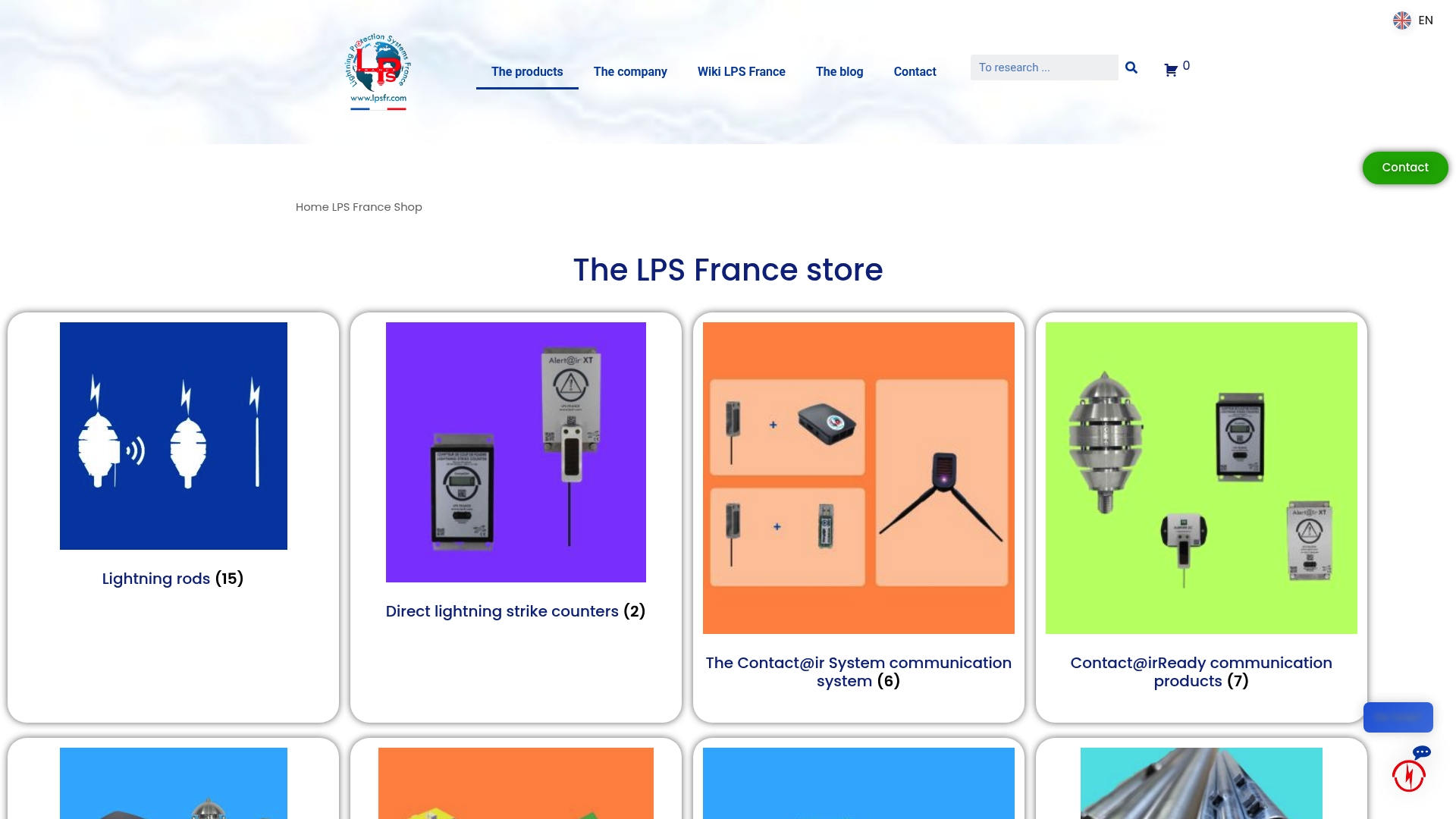
LPS France fabrique en France depuis 2010 paratonnerres Paraton@ir et Ellips conformes IEC 62305:2024, compteurs Compt@ir et Alert@ir XT, solutions mise à terre complètes. Tous produits bénéficient traçabilité laser, contrôles stricts et garanties étendues via LPS Manager. Besoin audit professionnel clé en main ? Découvrez services audit protection foudre réalisés par ingénieurs certifiés avec rapports normatifs et recommandations personnalisées. Contactez équipe technique pour dimensionner solution adaptée à vos installations spécifiques.
Foire aux questions sur l’audit de protection contre la foudre
Quand faut-il réaliser un audit après un coup de foudre ?
La norme NF C 17-102 impose vérification immédiate après chaque impact détecté. Compteurs communicants Compt@ir et Alert@ir XT déclenchent alertes automatiques via Contact@ir System dès coup foudre ≥ 1 kA, permettant intervention sous 24 heures maximum. Sans système connecté, inspectez dans les 48 heures suivant orage constaté proximité site.
Quels outils sont indispensables pour un audit complet ?
Minimum requis : Test@ir pour diagnostic filaire équipements non communicants, Contact@ir System (Dongl@ir ou Rout@ir selon besoin historiques) pour produits Contact@ir Ready, application LPS Manager pour consignation/rapports, ohmmètre terre pour mesures résistivité, appareil photo documentation défauts. Architecture Rout@ir + LPS Manager Pro recommandée audits professionnels multi-sites.
Comment sécuriser les données collectées lors de l’audit ?
LPS Manager stocke données sur serveurs redondants sécurisés avec contrôle accès basé droits propriétaire dossier. Activez authentification double facteur compte utilisateur. Côté terrain, sécurisez Rout@ir sur VLAN dédié avec filtrage sortant restrictif. Contact@ir MD utilise eSIM chiffrée. Pour déploiements enterprise, exigez documentation complète architecture cloud, chiffrement TLS, certificats PKI et logs auditabilité.
Quelle est la différence entre diagnostic local et supervision à distance ?
Diagnostic local (Dongl@ir) lit état actuel équipement sur site sans historisation ni alertes distantes, portée 80 mètres. Supervision distance (Rout@ir + internet ou Contact@ir MD cellulaire) enregistre historiques continus, envoie alertes temps réel au cloud LPS Manager, permet consultation depuis n’importe où 24/7. Supervision nécessaire conformité maintenance préventive normative.
Peut-on automatiser la maintenance grâce à l’audit connecté ?
Oui partiellement. Contact@ir System détecte automatiquement impacts, défauts électroniques et envoie alertes déclenchant workflows maintenance LPS Manager. Rappels automatiques vérifications annuelles programmés. Inspection physique terrain reste obligatoire mais devient ciblée sur équipements alertés. Édition Enterprise LPS Manager permet intégration API GMAO pour création automatique tickets intervention basés alertes télémétrie.
Combien coûte équipement audit conforme IEC 62305 ?
Kits matériel Contact@ir disponibles sur devis selon configuration. Abonnement LPS Manager débute à 0 € (Free basique), 2,99 €/mois (Data historiques), 9,99 €/mois (Pro rapports illimités), 29,99 €/mois (Expert branding), Enterprise sur devis (API/Fleet). Audit professionnel réalisé LPS France tarif selon périmètre installation. Investissement amorti rapidement via réduction sinistres et optimisation maintenance ciblée.
Recommandation
- IEC 62305-2:2024 : NSG, TWS et analyse de risque foudre
- Lightning risk calculation IEC 62305: a complete guide to assessing and sizing your protection – Lightning Protection Systems France – Lightning Protection
- Parafoudre Paratonnerre selon la Norme IEC 62305 – Lightning Protection Systems France – Protection Foudre
- Guide protection foudre 2026 : critères, architectures et recommandations