
Guía de protección contra el rayo 2026: criterios, arquitecturas y recomendaciones
Elegir un sistema de protección contra rayos de alto rendimiento en 2026 requiere cumplir con estándares estrictos, tecnologías conectadas y limitaciones operativas específicas de cada sitio. Ante la proliferación de soluciones PDC comunicantes y arquitecturas de red adaptadas, ingenieros e instaladores deben conciliar el cumplimiento normativo, el mantenimiento optimizado y la monitorización en tiempo real. Esta guía detalla los criterios de selección, compara tecnologías clave y ofrece recomendaciones concretas para garantizar una protección eficaz y sostenible.
Tabla de contenido
- Criterios de selección de sistemas de protección contra rayos en 2026
- Pararrayos comunicantes paraton@ir vs. ellips no comunicantes
- Arquitecturas de comunicación del contact@ir ® system : dongl@ir, rout@iry contact@ir md
- Herramientas de monitorización y mantenimiento conectadas: medidores, detectores y comprobadores
- Plataforma LPS Manager: monitorización, alertas e integración si
- Resumen comparativo y recomendaciones basadas en configuraciones del sitio
- Descubra nuestras soluciones lps france para una protección óptima contra el rayo en 2026
Puntos clave para recordar
| Punto | Detalles |
|---|---|
| Normas francesas 2026 | Las normas NFC 17-102:2011 e IEC 62305:2024 constituyen la base reglamentaria obligatoria para cualquier instalación en Francia. |
| Elección comunicativa o no | Diferenciar entre pararrayos Paraton@ir (supervisión en tiempo real) y Ellips (solución clásica) optimiza el mantenimiento y los costes según las necesidades. |
| Arquitecturas Contact@ir Sistema | Dongl@ir (80 m, diagnóstico local), Rout@ir (300 m, datos históricos), Contact@ir MD (IoT celular) se adaptan a las limitaciones de red de cada sitio. |
| Plataforma LPS Manager | Centraliza alertas instantáneas, datos históricos e informes automatizados, con API para integración BMS/SCADA en versiones Enterprise. |
| Recomendaciones por configuración | Los sitios aislados prefieren Contact@ir MD, los sitios multipunto optan por Rout@ir, los sitios pequeños sin historial eligen Dongl@ir. |
Criterios de selección de sistemas de protección contra rayos en 2026
La elección de un sistema PDC se basa en cinco criterios interdependientes que determinan el rendimiento técnico y la viabilidad operativa. Cada criterio se basa en los requisitos normativos franceses y las limitaciones del entorno real.
Cumplimiento de las normas francesas. Las normas NFC 17-102:2011 e IEC 62305:2024 constituyen la base regulatoria para la protección contra el rayo en Francia. Estas normas definen los niveles de protección, las áreas que deben cubrirse y la frecuencia de las inspecciones. Todas las instalaciones deben demostrar su cumplimiento mediante certificados de producto documentados y auditorías periódicas.
Análisis del tipo de emplazamiento y accesibilidad. Las limitaciones físicas determinan la arquitectura óptima. Los emplazamientos aislados sin infraestructura de red, las instalaciones multiedificio que requieren monitorización centralizada y las zonas de alto riesgo con difícil acceso requieren soluciones específicas. La evaluación previa de los puntos de instalación, las distancias entre equipos y las posibilidades de intervención influye en la elección entre sistemas con y sin comunicación.

Evaluación de la conectividad disponible. soluciones Rout@ir . La ausencia de una LAN fiable favorece Contact@ir con eSIM celular. La estabilidad y seguridad de la conexión a internet influyen en la fiabilidad de las notificaciones de alerta en tiempo real.
La monitorización y la gestión proactivas son esenciales. Los sistemas de protección contra rayos equipados con mantenimiento conectado reducen las intervenciones de emergencia en un 30 % . Las instalaciones críticas que requieren alertas inmediatas, trazabilidad completa del impacto y coordinación multisitio justifican la inversión en Contact@ir Ready combinadas con LPS Manager.
Planificación adecuada del mantenimiento. La norma NFC 17-102 exige inspecciones anuales y posteriores al impacto. Los pararrayos con comunicación activan automáticamente intervenciones específicas, optimizando así el tiempo y los recursos. Las soluciones sin comunicación requieren inspecciones programadas sistemáticas y Test@ir .
Consejo profesional: Antes de dimensionar la arquitectura de su contact@ir ® system , realice una auditoría preliminar del sitio que incluya el mapeo de la red, el análisis de la cobertura móvil y la identificación de áreas críticas. Este paso evita costos adicionales y garantiza un rendimiento óptimo.
Pararrayos comunicantes Paraton@ir vs. Ellips no comunicantes
La gama LPS France ofrece dos enfoques tecnológicos distintos, adaptados a diferentes contextos operativos. Comprender sus particularidades técnicas y funcionales facilita la elección óptima.
Rendimiento técnico y alerta temprana. Paraton@ir ofrece alerta temprana entre 10 y 60 µs y monitorización en tiempo real de la caída de rayos. Los cuatro modelos (10/25/45/60 µs) se adaptan a los radios de protección requeridos según la altura de instalación y el nivel de riesgo. Ellips ofrece un rendimiento equivalente (1,0 a 1,4, hasta 60 µs), pero sin conectividad nativa, lo que requiere Test@ir .
Monitoreo y alertas instantáneas. Paraton@ir integra Contact@ir Ready, lo que permite alertas inmediatas en caso de detectar un impacto. Al combinarse con Rout@ir o Contact@ir MD, cada evento se envía a LPS Manager con una marca de tiempo precisa. Ellips requiere la adición de un Compt@ir o Alert@ir XT en el controlador de descenso para lograr una funcionalidad similar.
Mantenimiento y cumplimiento simplificados. La conectividad Paraton@ir automatiza la activación de las comprobaciones posteriores al impacto requeridas por la norma NFC 17-102. El historial accesible remotamente reduce los desplazamientos innecesarios y facilita la comprobación del cumplimiento durante las auditorías. Ellips exige inspecciones programadas sistemáticas y documentación manual.
| Criterios | Paraton@ir | Ellips |
|---|---|---|
| Avance de cebado | 10 a 60 µs | 10 a 60 µs (equivalente) |
| Conectividad nativa | Sí (Contact@ir Listo) | No (se requiere añadir un contador) |
| Alertas en tiempo real | Sí (inmediato si Rout@ir/MD) | No (excepto para agregar un contador) |
| Mantenimiento | Automatizado/dirigido | Planificado/sistemático |
| Cumplimiento de la norma NFC 17-102 | Simplificado (trazabilidad automática) | Manual (Test@ir + informes) |
| Costo inicial | Superior | Más bajo |
Casos de uso recomendados. pararrayos comunicante Paraton@ir es adecuado para instalaciones en múltiples ubicaciones, zonas de difícil acceso e infraestructuras críticas que requieren máxima capacidad de respuesta. Ellips está diseñado para ubicaciones con presupuestos limitados, sin necesidad de monitorización remota, pero que aceptan inspecciones periódicas programadas.
Consejo profesional: Para modernizar gradualmente una instalación Ellips existente, añada contadores Alert@ir XT a los conductors e implemente una arquitectura de contact@ir ® system adecuada. Este enfoque escalable optimiza las inversiones sin necesidad de un reemplazo completo.
Arquitecturas de comunicación del contact@ir ® system : Dongl@ir, Rout@iry Contact@ir MD
El contact@ir ® system ofrece tres arquitecturas complementarias que abordan distintas restricciones de red y operativas. Cada solución combina un alcance de radio específico, modos de transmisión e integración con LPS Manager.
Contact@ir + Dongl@ir: diagnóstico móvil de corto alcance. Esta arquitectura proporciona diagnóstico in situ mediante un receptor USB conectado a un smartphone o tableta Android. El alcance de radio está limitado a 80 m en campo abierto. Ideal para comprobaciones programadas sin infraestructura permanente. Sin historial ni alertas remotas; los datos solo son accesibles mediante conexión física.
Contact@ir + Rout@ir : Monitoreo de múltiples transmisores con registro de datos históricos. Rout@ir agrupa hasta 999 transmisores en un radio de 300 m. Lectura local mediante Bluetooth ( Rout@ir para Android) o carga a la nube si hay conexión a internet (Wi-Fi/Ethernet/datos móviles). El registro de datos históricos locales garantiza la conservación de datos incluso en caso de una interrupción temporal de la red. Las alertas en tiempo real se envían inmediatamente a la nube en caso de impacto y se muestran al instante en LPS Manager.
Contact@ir MD: IoT celular autónomo. Contact@ir MD utiliza la red IoT celular con eSIM para notificaciones de alerta instantáneas, incluso fuera de una LAN. Esta solución plug-and-play no requiere receptor dedicado, realiza autodiagnósticos cada 12 horas y envía alertas sin demora. Compatible con 4G/3G/2G/Edge/GPRS, es ideal para ubicaciones dispersas sin infraestructura de red utilizable.
Criterios de selección basados en restricciones del sitio.
- Sitios aislados sin LAN confiable: Contact@ir MD garantiza una autonomía completa a través de la red móvil.
- Instalaciones multipunto en un solo sitio: Rout@ir centraliza la monitorización con historial local y en la nube.
- Comprobaciones puntuales sin necesidad de datos históricos: Dongl@ir ofrece diagnósticos inmediatos a un coste mínimo.
- Estrictas restricciones de seguridad de TI: Dongl@ir evita la exposición de la red, Rout@ir permite la segmentación de VLAN dedicada.
Consejo profesional: Pruebe siempre la cobertura de radio de 868 MHz y la calidad de la red móvil in situ antes de la implementación. Las antenas Rout@ir ubicadas a cierta altura optimizan el alcance; Contact@ir MD requiere una señal celular estable para recibir alertas fiables.
Herramientas de monitorización y mantenimiento conectadas: medidores, detectores y comprobadores
Más allá de los pararrayos, LPS France ofrece herramientas de campo esenciales para la trazabilidad de los impactos, el seguimiento del estado de los equipos y el diagnóstico preciso de acuerdo con los requisitos normativos.
Compt@ir : Contador digital preciso. Los contadores digitales Compt@ir permiten un control preciso del número de impactos para optimizar el mantenimiento. Incluyen una pantalla de 6 dígitos, detección de corriente mínima (≥ 1 kA), detección de corriente máxima (> 100 kA) y registro de impactos positivos y negativos. Apto para montaje en conductores planos o redondos, con clasificación IP65. El sistema opcional Contact@ir transforma el dispositivo en un transmisor de alerta remota.
Alert@ir XT: Detección sin pantalla. Contador de rayos autónomo que funciona sin fuente de alimentación externa. Dimensiones compactas (70 × 50 × 60 mm), se monta sobre conductores existentes y cumple con la norma NF EN 50164-6. En combinación con el Contact@ir , activa alertas en tiempo real para cada rayo, actualizando automáticamente los datos históricos en el LPS Manager.
Alert@ir DC: Dispositivo protector contra sobretensiones protector contra sobretensiones . Alertas instantáneas de fallos por correo electrónico y smartphone, instalación en segundos, alimentación fotovoltaica y batería (5 años de vida útil). Integración Contact@ir mediante Rout@ir , intercambio de información con el equipo de mantenimiento mediante la app.
Test@ir : diagnóstico de campo cableado. Herramienta de pruebas físicas para productos Contact@ir Ellips (con accesorio específico). Dimensiones: 150 × 100 × 20 mm; valida el correcto funcionamiento in situ. Los resultados se registran manualmente en LPS Manager para la trazabilidad y el cumplimiento normativo. Esencial para las verificaciones anuales según la norma NFC 17-102 o las comprobaciones posteriores a eventos que requieren evidencia cableada.
Estrategia de integración óptima. instalaciones Paraton@ir incorporan monitorización nativa. Ellips se benefician de la incorporación de Alert@ir XT para una modernización gradual sin necesidad de sustituir pararrayos. Protector Contra Sobretensiones las áreas interiores críticas monitorizadas mediante Alert@ir DC previenen fallos silenciosos costosos.
Plataforma LPS Manager: monitorización, alertas e integración con sistemas TI
LPS Manager centraliza todos los datos de campo en una interfaz multiplataforma (Android, iOS, Windows, macOS, web) que ofrece una gestión proactiva de las instalaciones y un cumplimiento normativo simplificado.
Gestión multisitio y multiusuario. LPS Manager ofrece gestión multiusuario e integración de API con BMS y SCADA para una monitorización completa. Se otorgan derechos de acceso granulares por propietario de carpeta, y los equipos de campo se coordinan mediante directorio y chat integrado. La geolocalización de Google Maps facilita la visualización de activos dispersos.
Hay alertas en tiempo real e históricas disponibles. Se reciben notificaciones push instantáneas sobre impactos detectados, protector contra sobretensiones o anomalías del sistema. Los historiales detallados (edición de datos) mantienen una cronología completa de eventos con marcas de tiempo precisas. Los informes automatizados (edición Pro) generan evidencia de cumplimiento para las auditorías de NFC 17-102.
Integración con sistemas de información existentes. Una clave API (edición Enterprise o función opcional) facilita la conexión directa con plataformas BMS, SCADA, CMMS o analíticas. LPS France ofrece soporte desde la recuperación de datos hasta la visualización de paneles personalizados. La opción Flota coordina intervenciones en múltiples sitios con trazabilidad completa.
Suscripciones modulares adaptadas a tus necesidades.
- Gratuito (0€): creación de carpetas, alertas en tiempo real, detección de rayos, información meteorológica.
- Datos (2,99€/mes): histórico detallado de productos conectados y alertas.
- Pro (9,99 €/mes): informes ilimitados, soporte por correo electrónico, gestión de casos ampliada.
- Experto (29,99 €/mes): marca personalizada, almacenamiento ilimitado, soporte por chat.
- Empresa (bajo cotización): API, flota, marca completa, capacitación dedicada.
Valor añadido en cumplimiento normativo y gestión. La centralización de datos facilita la demostración del cumplimiento normativo durante las auditorías regulatorias. Los análisis de impacto estadístico por sitio guían las decisiones de mantenimiento preventivo. El archivado seguro (servidores redundantes) garantiza la conservación de la evidencia a largo plazo.
Resumen comparativo y recomendaciones basadas en configuraciones del sitio
El siguiente cuadro resumen orienta la elección arquitectónica en función de las limitaciones del sitio, los presupuestos y los requisitos operativos específicos de cada configuración encontrada en Francia en 2026.
| Configuración del sitio | Conectividad disponible | Arquitectura recomendada | Pararrayos adecuados | Justificación |
|---|---|---|---|---|
| Sitio aislado sin LAN | Solo red móvil | Contact@ir MD | Paraton@ir + MD | Autonomía completa, alertas celulares instantáneas, sin dependencia de infraestructura local |
| Sitio único multipunto | Wi-Fi/Ethernet estable | Contact@ir + Rout@ir | Paraton@ir + Rout@ir | Control centralizado de 999 transmisores, almacenamiento de historial local, monitoreo en tiempo real vía Internet |
| Sitio web pequeño con un presupuesto ajustado | Ninguno (o inestable) | Contact@ir + Dongl@ir | Ellips + Dongl@ir | Diagnósticos locales puntuales, CAPEX mínimo y controles programados son suficientes |
| Infraestructura crítica | LAN segura + redundancia | Rout@ir + API empresarial | Paraton@ir + Compt@ir | Integración BMS/SCADA, máxima trazabilidad, alertas multicanal |
| Modernización gradual | Variable según el sitio | Contadores añadidos + Rout@ir | Ellips existentes + Alert@ir XT | Evolución sin reemplazo completo, supervisión añadida gradualmente |
Recomendaciones específicas por contexto.
Las plantas industriales con varios edificios prefieren Rout@ir para una infraestructura en la nube centralizada y heredada. La instalación de una antena a gran altitud optimiza la cobertura hasta 300 m, y una conexión LAN segura (VLAN dedicada) garantiza la integridad del flujo de datos.
Las infraestructuras de telecomunicaciones distribuidas adoptan Contact@ir MD para cada torre, lo que evita la implementación de redes entre sitios. La cobertura 4G/3G se valida de antemano y se requiere una suscripción mínima a LPS Manager Data para los sistemas heredados.
Los sitios terciarios con presupuestos limitados comienzan con Ellips + Test@ir, añaden medidores Alert@ir XT en conductores críticos y, posteriormente, Dongl@ir para diagnóstico móvil. Migración gradual a Rout@ir si se requiere monitoreo remoto.
Equilibrio entre costo y cumplimiento: mayor inversión inicial Paraton@ir compensada por la reducción de intervenciones (30% según LPS France), mantenimiento optimizado y auditorías NFC 17-102 facilitadas. Retorno de la inversión (ROI) típico de 18 a 24 meses en infraestructuras críticas.
Descubra nuestras soluciones LPS France para una protección óptima contra el rayo en 2026
LPS France apoya a ingenieros e instaladores en la implementación de sistemas de protección contra rayos de alto rendimiento que cumplen con las normas francesas 2026. Nuestra gama completa incluye pararrayos PDC certificados, arquitecturas modulares del contact@ir ® system y la plataforma LPS Manager para una supervisión centralizada.
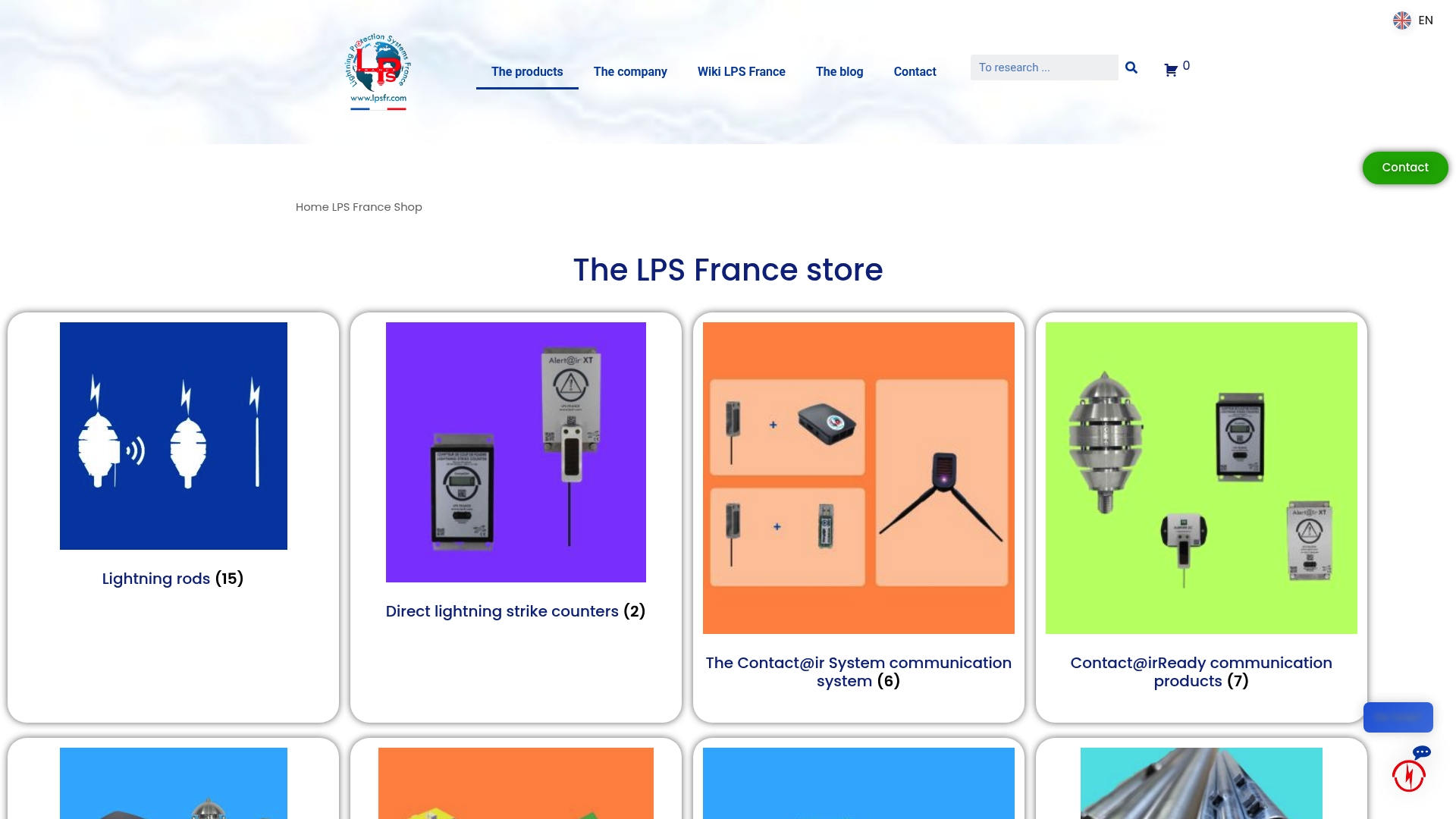
Descubra nuestros kits listos para instalar, aptos para todo tipo de infraestructura. El kit de protección para torres arriostradas incluye todos los componentes necesarios para una instalación rápida y conforme a la normativa. Nuestros accesorios certificados (estacas, conductores, conectores) garantizan la calidad y la trazabilidad de la fabricación francesa.
Benefíciese de nuestra experiencia técnica y regulatoria mediante servicios de auditoría, dimensionamiento de instalaciones y capacitación profesional. Nuestro soporte especializado le acompaña desde el diseño hasta la implementación, con asistencia para la configuración de LPS Manager e integración de API para arquitecturas complejas.
Consulte también nuestra guía de protección contra rayos para el hogar para comprender los fundamentos y concienciar a los clientes finales. Haga su pedido directamente a través de nuestra tienda en línea o contacte con nuestro equipo de ventas para solicitar presupuestos para proyectos específicos.
Preguntas frecuentes
¿Qué normas deben cumplirse estrictamente en 2026 en materia de protección contra rayos?
La norma NFC 17-102:2011 y la nueva norma IEC 62305:2024 son de obligado cumplimiento en Francia. Definen los criterios técnicos para todos los sistemas PDC , los niveles de protección requeridos y la frecuencia de las inspecciones. Todos los productos instalados deben presentar certificados de conformidad con estas normas durante las auditorías regulatorias.
¿Cómo garantizar un mantenimiento proactivo con los sistemas conectados de LPS France ?
Utilice los contadores Compt@ir y los detectores Alert@ir para la monitorización en tiempo real de los impactos y el estado del equipo. La plataforma LPS Manager le avisa automáticamente de cada evento, activando intervenciones específicas que cumplen con la norma NFC 17-102. Los registros de historial accesibles remotamente reducen los desplazamientos innecesarios en un 30 %.
¿Qué arquitectura se debe elegir para un sitio aislado sin acceso confiable a Internet?
Contact@ir MD con eSIM celular garantiza alertas instantáneas sin depender de la red local. Una solución independiente ideal para sitios remotos o con cobertura de red local limitada, compatible con 4G/3G/2G/Edge/GPRS. Informes directos desde la nube a LPS Manager sin infraestructura adicional y autodiagnóstico del producto cada 12 horas.
¿Es posible modernizar una instalación Ellips existente sin un reemplazo completo?
Sí, añada contadores Alert@ir XT a los conductors y luego implemente la arquitectura del contact@ir ® system adecuada (Dongl@ir, Rout@ir o MD, según la conectividad). Este enfoque gradual transforma un sistema tradicional en una instalación conectada sin retirar pararrayos funcionales, optimizando la inversión y manteniendo el cumplimiento normativo.
¿Cómo se integra LPS Manager con los sistemas BMS y SCADA existentes?
La clave API proporcionada (edición Enterprise u opcional) permite la conexión directa con plataformas BMS, SCADA y CMMS. El equipo de LPS France ofrece soporte desde la recuperación de datos hasta la visualización de paneles personalizados. Los protocolos estándar facilitan la integración, y las fuentes de datos en tiempo real facilitan la monitorización centralizada de múltiples sistemas.