An unusual odor near an electrical panel, a trace of browning, or a fault indicator should never be ignored. However, these signs do not allow one to conclude, remotely, that a surge protector has "absorbed too much lightning." They first call for appropriate safety measures and a diagnosis performed by a qualified professional.
In industrial and commercial facilities worldwide, surge protection often operates silently for years. As a result, its condition can be overlooked as long as the powered equipment continues to function. However, continuous power supply is not proof that the protection remains operational.
Heating due to aging and leakage current primarily affects varistor-type surge arresters (MOVs); spark gaps and gas tubes exhibit different behavior. Understanding these mechanisms helps in asking the right questions: what technology is used in the surge arrester, what stresses has it been subjected to, and what condition is indicated by its monitoring system? This article distinguishes between physical phenomena, indicators to be documented, and the limitations of monitoring. However, it does not propose a universal leakage current threshold or a live measurement procedure: these decisions depend on the equipment and the actual electrical context.
Why can a surge protector get hot?
A surge protector can heat up when the electrical energy it dissipates increases or when its operating conditions deteriorate. In a varistor device, increased conduction can contribute to heating; however, the temperature also depends on the assembly, the environment, and any connection faults.
Start with the component's function
A surge protector is a device that limits transient overvoltages and diverts the associated currents to protect circuits. A transient overvoltage is a brief surge in voltage, often caused by lightning or certain electrical processes.
publication IEC 61643-11:2025 addresses the requirements and test methods for surge arresters connected to low-voltage AC networks. It specifies that these devices must include at least one nonlinear component designed to limit voltages and divert surge currents; it does not treat all models as identical products. In France, these requirements are published under the reference NF EN 61643-11.
- Technology matters: not all surge protectors rely on the same component.
- The power supply conditions must correspond to the characteristics of the equipment.
- The thermal constraints of the table must be taken into account.
- A faulty connection can create a hot spot separate from the protective component.
Do not confuse three phenomena
A pulsed current, a low current during normal operation, and sustained abnormal conduction do not describe the same situation. Therefore, simply referring to "current in the surge protector" is insufficient to explain heating. The duration of the phenomenon and the technology involved must be specified.
Leakage current, Joule effect: what are the differences?
A varistor is a component whose electrical resistance varies significantly with the applied voltage. Leakage current is the current that flows through insulation or a device under conditions where only weak conduction is expected.
The Joule effect is the conversion of electrical energy into heat when a current passes through a resistive material. Therefore, an increase in dissipated power can contribute to a rise in temperature if the heat is not sufficiently removed.
This phenomenon primarily concerns surge arresters with zinc oxide varistors. In contrast, spark gaps and gas tubes do not exhibit comparable leakage currents during normal operation; their behavior must therefore be analyzed differently.
Why a simplified formula is not enough for diagnosis
In an ideal resistor, the power dissipated depends on the current and the resistance. However, a varistor is a non-linear component: its resistance cannot be considered a single constant under all conditions. Therefore, a single measurement does not allow for a simple determination of its remaining lifespan.
- The applied voltage influences conduction.
- Ambient temperature alters operating conditions.
- The history of stresses can affect the behavior of the component.
- The results must be interpreted according to the manufacturer's data and procedures.
In particular, a value found online does not constitute a replacement threshold applicable to all surge protectors. Furthermore, the measurement method, installation, and power supply conditions can alter the result. The professional must have the exact part number and its documentation.
Aging and disconnection: what a fault actually signals
A protective component can be affected by repeated stresses or by an event exceeding its permissible limits. However, it would be misleading to state a universal number of lightning strikes before replacement. The actual stresses experienced are not limited to the number of thunderstorms observed nearby.
In practical terms, the leakage current of a varistor tends to increase with age: repeated shocks, temporary overvoltages. The power dissipated then increases with this current, which increases heating and can lead to thermal runaway.
- Temporary network overvoltages (TOV), for example during a loss of neutral or a fault between high and low voltage, are the most frequent cause of sudden heating when they exceed Uc. They are distinct from transient overvoltages of lightning origin.
- The maximum continuous operating voltage (Uc) of the surge arrester must therefore be adapted to the earthing scheme of the installation.
- The choice and implementation are covered by the publication IEC 61643-12 and, in France, by the standard NF C 15-100 and the guide UTE C 15-443.
Thermal disconnection is not a thermometer
A thermal disconnect device is a mechanism that separates a component when temperature conditions defined by its design are reached. Depending on the product, an indicator or contact may provide status information related to this separation.
However, a fault contact does not necessarily indicate the temperature, leakage current, or detailed cause of the failure. Therefore, the return of binary information should not be presented as a complete physical analysis of the surge protector.
- Read the meaning of the indicator in the model's instruction manual.
- Distinguishing a fault state from an analog measurement.
- Verify the actual monitored area and transmission conditions.
- Keep the product reference and the date of the observation.
A faulty indicator means the module is no longer providing protection. When the thermal disconnector has isolated the varistor at the end of its life, the cartridge or surge protector, depending on the model, must be replaced by a professional. Furthermore, this internal disconnector should not be confused with the upstream disconnect protection device, such as a fuse or circuit breaker, as specified by the manufacturer.
Protection may be unavailable without a general outage
Depending on the system architecture, a surge protector may be disconnected while the circuits remain powered. Therefore, the absence of machine failures does not automatically mean the surge protector is operational. Verifying its status is a separate action from production monitoring.
What signs should be documented before a professional intervention?
A burning smell, smoke, or an unusual noise warrants following the site's emergency procedures. Therefore, the first action is not to open the control panel to "take a closer look," but to protect people and contact the appropriate personnel. Do not touch any suspect equipment or attempt any electrical troubleshooting yourself.
Replacement must be carried out by an authorized person, according to the manufacturer's instructions. For monitoring over time, thermography can help detect abnormal heating; however, it cannot be interpreted without a universal threshold, by comparing readings taken under similar conditions.
Building useful information without taking risks
- Indicate the site, building and painting concerned.
- Describe the observed sign without asserting an unverified cause.
- Note the time, operating conditions, and known events.
- Include only photographs obtained without exposure to danger.
- Transmit available references and intervention history to the professional.
For example, "indicator failed after the storm, display still powered" is a usable observation. On the other hand, "varistor destroyed by a direct impact" is a conclusion that requires further investigation. This documentation discipline facilitates diagnosis and prevents prematurely concluding a hypothesis.
The control goes beyond just the module
The professional may need to examine the choice of equipment, its connections, associated protection, and the surrounding environment of the electrical panel. However, the list and methods of inspection depend on the installation. Operations must be prepared according to locally applicable electrical safety procedures and the manufacturer's instructions.
Monitor the condition, then organize the maintenance
Supervision is the system that collects and tracks information from equipment to guide action. It can reduce the time a change in state goes unnoticed; however, it does not guarantee that no degradation will occur between two pieces of information received.
Giving communication devices their proper role
The communication solutions in the Contact@ir System must be selected according to the equipment actually installed. In particular, their presence does not guarantee that leakage current or temperature is being measured if this function is not explicitly documented.
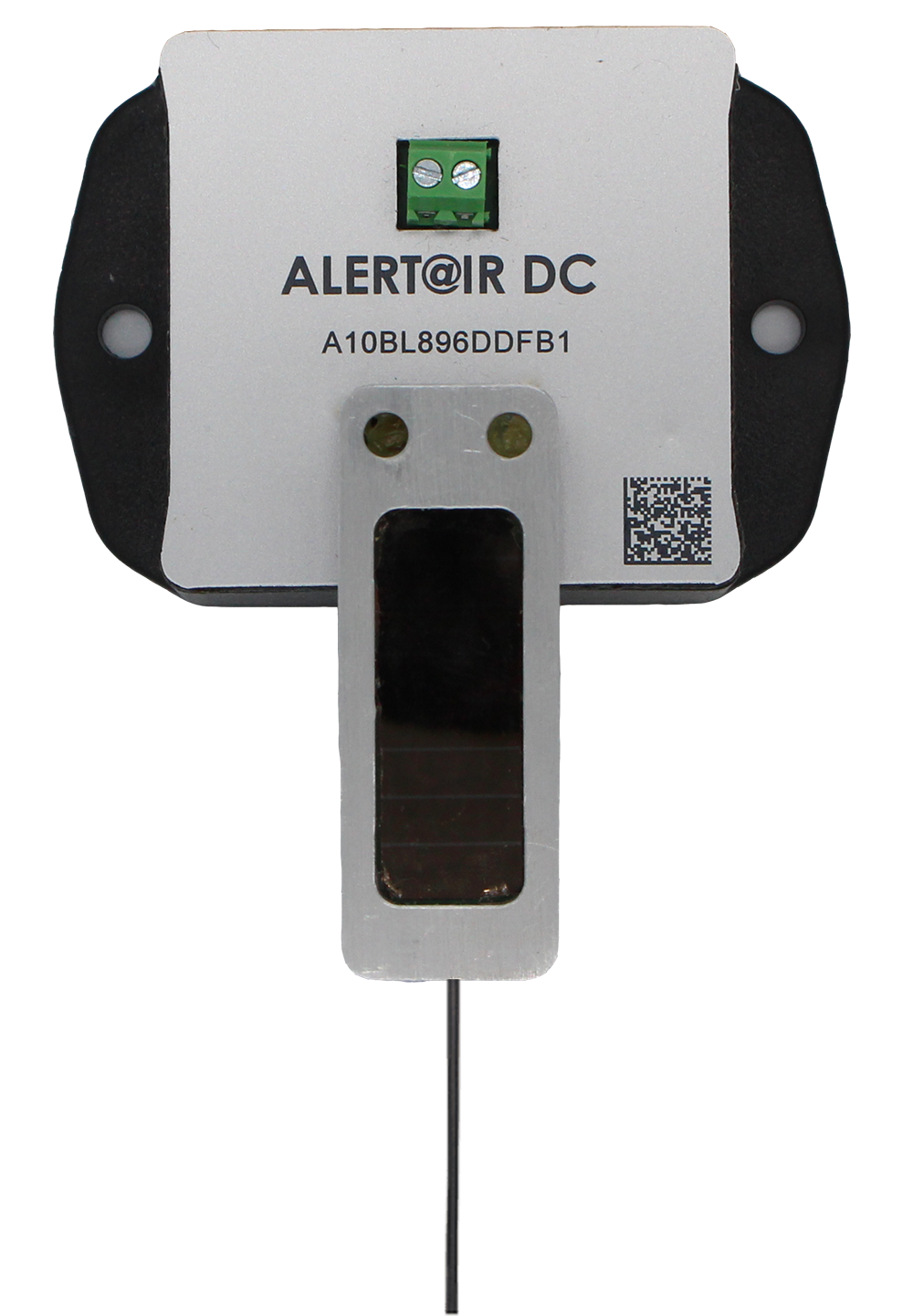
At LPS France, theAlert@ir DC remotely monitors the operating status of the surge protector, without measuring temperature or leakage current. TheAlert@ir DC can be optionally connected to the Contact@ir System communication system to transmit this information; it does not replace electrical diagnostics or installation verification.
- Observe: specify the information actually provided by the product.
- Transmit: check the availability of the means of communication.
- To decide: to assign the processing to a responsible person.
- Control: keep track of the result of the intervention and the return to service.
Maintaining an international perspective
The IEC 62305 framework (2024 edition) governs lightning protection, while the IEC 61643 series addresses surge protection devices. Furthermore, local requirements, network type, and manufacturer's instructions remain crucial for each project. Therefore, a common monitoring method can be implemented across multiple countries without imposing a single electrical regulation on all sites.
In conclusion, overheating of a surge protector requires analysis of the component, its environment, and its operating conditions. Leakage current cannot be assessed using a generic threshold, and a fault contact does not constitute a complete diagnosis. Monitoring makes the information more visible, while the professional determines the necessary checks and corrections. To prepare for monitoring your installation, have the information actually available specified by LPS solutions to make your installation communicative before defining your maintenance procedure.
Frequently Asked Questions
Does a surge protector that is overheating need to be replaced?
Not automatically. Abnormal overheating first requires a safety shutdown and diagnosis by a qualified professional, according to the manufacturer's instructions. However, if the indicator has malfunctioned, the module no longer provides protection and must be replaced.
Is there a universal leakage current threshold?
No. The result of a measurement must be interpreted according to the exact model number of the surge protector and the manufacturer's documentation. A value found on the internet is not a valid replacement threshold.
Does theAlert@ir DC measure the temperature or the leakage current of the surge protector?
No. At LPS France, theAlert@ir DC remotely monitors the operating status of the surge protector, without measuring temperature or leakage current. Optionally linked to the Contact@ir System communication system, it can transmit this information, but it does not replace electrical diagnostics or installation verification.
Sources: IEC 61643-11:2025, official presentation (link above); Contact@ir System range.