
Indeed, choosing the right materials for your lightning protection systems directly determines their reliability and regulatory compliance. Copper, aluminum, and stainless steel have different electromechanical properties that you must understand to optimize your industrial projects. This article guides you through the technical characteristics, galvanic compatibility, and communication technologies that transform maintenance into an intelligent and traceable process compliant with IEC 62305 and NF C 17-102 standards .
Table of Contents
- Key points to remember
- Introduction to lightning protection and the role of materials
- Conductor materials: characteristics, advantages and limitations
- Lightning rod technologies: ESE early streamer emission devices
- contact@ir communication systems: integrated materials and technologies
- Grounding accessories and solutions: materials and compatibility
- Intelligent maintenance and monitoring via LPS Manager
- Comparison and selection of materials according to industrial use cases
- Myths and realities about lightning protection materials
- Discover our complete industrial lightning protection solutions
- Frequently Asked Questions
Key Points to Remember
| Point | Details |
|---|---|
| Conductivity | Copper offers 59.6 MS/m compared to 37.7 MS/m for aluminium and 1.4 MS/m for stainless steel. |
| ESE Materials | Early streamer emission (ESE) lightning rods exist in communicating versions Paraton@ir and non-communicating versions Ellips). |
| Connected monitoring | Contact@ir systems operate on 868 MHz frequencies with ranges up to 300 m depending on the architecture. |
| Galvanic compatibility | Copper-aluminum assemblies without suitable connectors cause corrosion and loss of electrical continuity. |
| Digital traceability | LPS Manager centralizes up to 999 devices per site with real-time alerts and compliant historical data. |
Introduction to lightning protection and the role of materials
Lightning protection in industrial environments relies on the ability of conductive materials to safely dissipate atmospheric electrical discharges to the ground. This critical function requires materials with high electrical conductivity, sufficient mechanical strength, and durability against environmental stresses. IEC 62305 and NF C 17-102 govern lightning protection requirements for industrial sites , establishing the performance and installation criteria that must be met.
Furthermore, the three main conductor materials used in industrial lightning protection are:
- Copper, which combines maximum conductivity and excellent corrosion resistance
- Aluminium offers an optimized weight/performance ratio for lightweight structures
- Stainless steel, preferred for its mechanical strength in harsh environments
Furthermore, your choice of materials directly impacts the overall design of the protection system. The conductor cross-section, the fastening method, the connectors, and the grounding all depend on the specific properties of the selected material. This initial decision also determines the maintenance strategy and the lifespan of your installation.
Conductor materials: characteristics, advantages and limitations
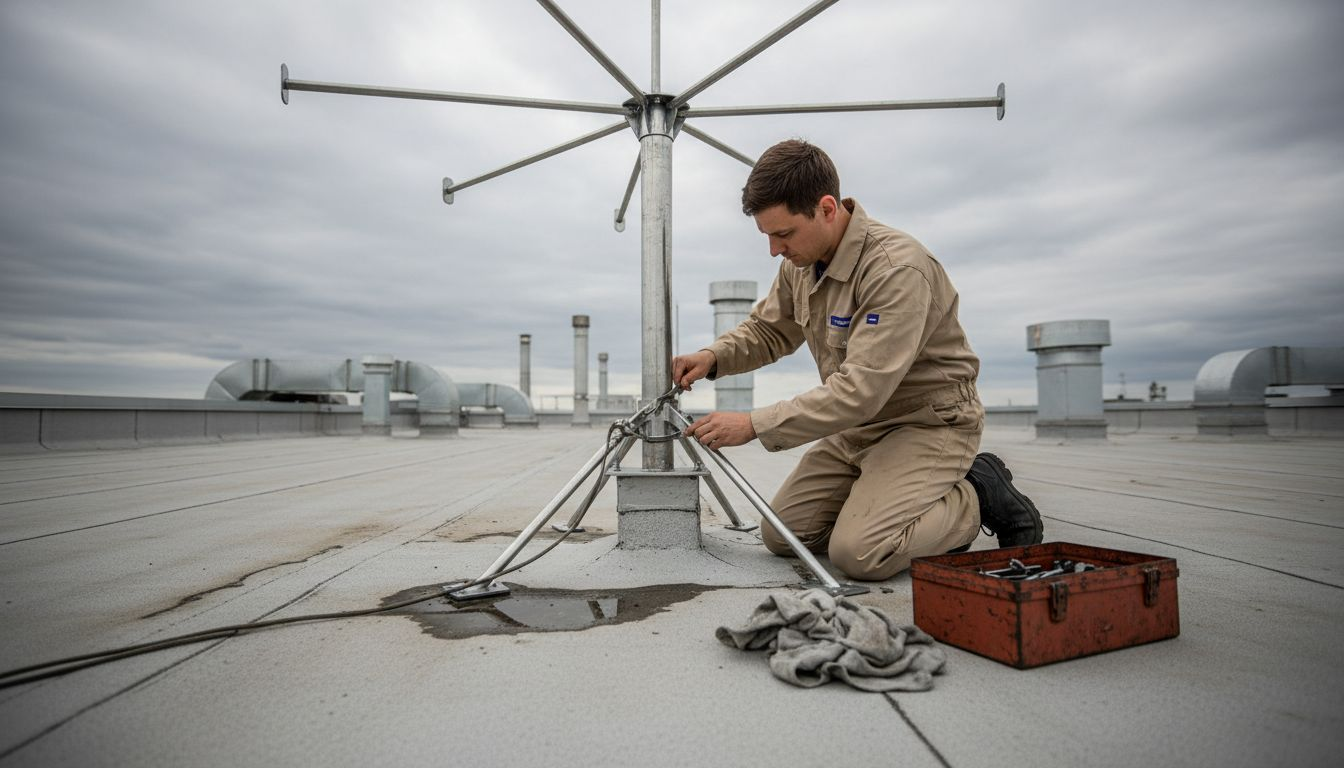
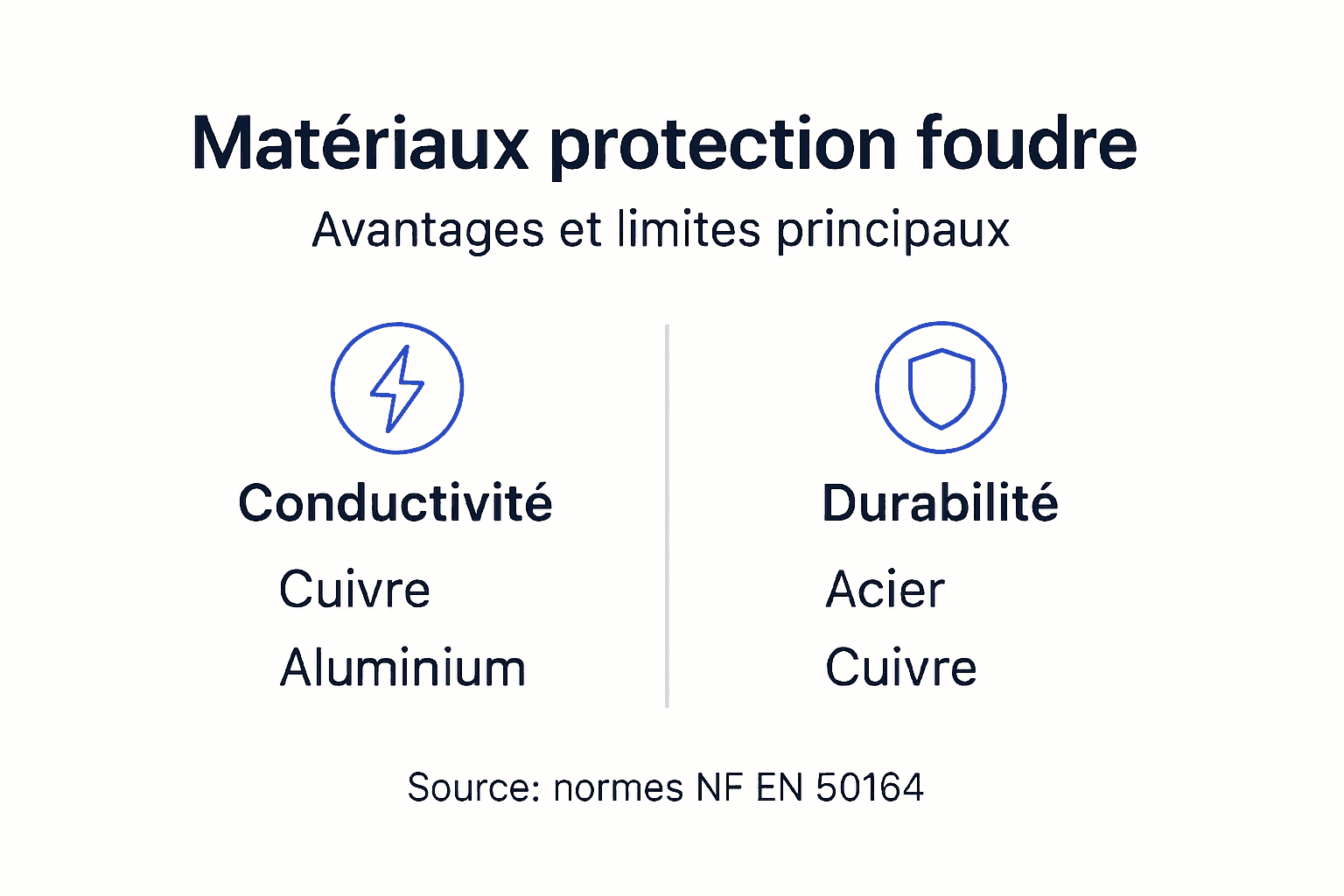
Furthermore, copper offers the best electrical conductivity at approximately 59.6 MS/m and excellent corrosion resistance . These properties make it the material of choice for marine or chemically aggressive environments. Its malleability facilitates installation in complex geometries while maintaining optimal electrical continuity. Its higher cost is its main drawback, but its durability compensates for this initial investment in the long run.
Note that aluminum has a conductivity of 37.7 mS/m, which is 63% that of copper. Its 70% lighter weight compared to copper is a major advantage for tall structures or lightweight roofs. However, you must anticipate its susceptibility to galvanic corrosion when it comes into contact with other metals. Appropriate protection and bimetallic connectors are essential to maintain electrical continuity.
In general, stainless steel, with its conductivity of 1.4 MS/m, offers superior mechanical strength and exceptional durability in harsh industrial environments. It is primarily used for deep grounding rods, support structures, and areas subject to high mechanical stress. Its low conductivity necessitates larger cross-sections than copper or aluminum to carry the same discharge current.
| Material | Conductivity (MS/m) | Density (kg/m³) | Corrosion resistance | Relative cost |
|---|---|---|---|---|
| Copper | 59,6 | 8960 | Excellent | Pupil |
| Aluminum | 37,7 | 2700 | Average | Moderate |
| Stainless steel | 1,4 | 7900 | Very good | Variable |
In practice, Pro Tip: Favor single-material assemblies in critical areas of your installation. If you must mix copper and aluminum, use only certified bimetallic connectors to avoid galvanic corrosion, which would degrade electrical continuity within a few years.
In practical terms, galvanic compatibility is a major, often underestimated issue. The electrochemical table of metals indicates that copper and aluminum, separated by 0.9V, form an active galvanic couple in the presence of moisture. This electrochemical reaction causes accelerated oxidation, increased contact resistance, and a risk of continuity loss. Always check the characteristics of conductor materials before any assembly.
Lightning rod technologies: ESE early streamer emission devices
Early streamer emission (ESE) lightning rods operate by generating a time lead in the activation of the upward leader, thus increasing the protection radius. This technology uses an internal electronic device that detects variations in the atmospheric electric field and triggers the early emission of an upward leader. The materials used in these devices combine mechanical strength, electrical conductivity, and the ability to withstand extreme temperatures during discharges.
It should be noted that the Ellips consists of non-communicating PDAs that can be integrated with communicating meters . These models offer four ignition advance levels: 10, 25, 45, and 60 microseconds. Each level corresponds to a different protection radius, determined according to the installation height and the level of protection required by IEC 62305 and NF C 17-102 standards. You will select the appropriate model after calculating the volume to be protected and assessing the local keraunic level.
In reality, the key difference between communicating and non-communicating PDAs lies in their remote monitoring capabilities. Paraton@ir early streamer emission (ESE) lightning rods Contact@ir modules , enabling automatic diagnostics and real-time alerts. Ellips , designed for standalone operation, require wired diagnostics via Test@ir Compt@ir or Alert@ir communicating meters to the down conductor.
Indeed, your industrial applications determine the technological choice:
- Isolated sites without connectivity: Ellips with scheduled checks
- Multi-building installations: Paraton@ir with centralized supervision
- Gradual modernization: Ellips + communicating meters for event traceability
- High-criticality new projects: Paraton@ir with Rout@ir or Contact@ir MD architecture
However, modernizing existing installations represents a cost-effective strategy. You retain the functional Ellips ESEs and add communicating detection devices that transform a conventional installation into a monitored system. This approach optimizes your investment while improving regulatory compliance and event traceability.
Contact@ir communication systems: integrated materials and technologies
However, Contact@ir devices operate on 868 MHz frequencies, Bluetooth, and cellular IoT with photovoltaic or battery power . The transmitters incorporate UV-resistant composite materials, IP65-protected printed circuit boards, and ceramic antennas optimized for long-range transmission. The photovoltaic power supply uses high-efficiency cells that function even in diffuse light, coupled with supercapacitors to ensure continuous 24/7 transmission.
However, all three communication architectures offer compromises adapted to your constraints:
- Contact@ir + Dongl@ir : nomadic diagnosis up to 80 m, without permanent infrastructure
- Contact@ir + Rout@ir : multi-transmitter monitoring up to 300 m with local history logging and cloud upload
- Contact@ir MD: Standalone cellular IoT with international eSIM and 4G/3G/2G/Edge/GPRS transmission
Nevertheless, the 868 MHz band offers optimal propagation in urban and industrial environments, penetrating minor obstacles while maintaining minimal power consumption. The Bluetooth protocol allows for local reading on a smartphone without using data. This is useful for on-site checks with limited internet connectivity. The cellular IoT option eliminates any dependence on the client network, simplifying deployment and security.
For example, Pro Tip: For your geographically dispersed multi-site projects, choose Contact@ir MD, which eliminates local network infrastructure costs. If you manage a single industrial site with multiple buildings, the Rout@ir connected to your LAN optimizes centralized monitoring while enabling local Bluetooth reading during maintenance rounds.
Specifically, diagnostic and monitoring systems ensure predictive maintenance through automatic fault detection, lightning current measurement, and precise event time-stamping. This digital traceability meets regulatory requirements for annual and post-impact verification, transforming a regulatory obligation into an operational advantage. You thus have a complete history that demonstrates compliance during audits or post-incident assessments.
Grounding accessories and solutions: materials and compatibility
In particular, the grounding rod and connectors are the critical components ensuring the final dissipation of lightning current. Accessories must comply with IEC 62561 to guarantee conductivity and corrosion resistance . The target ground resistance, generally less than 10 ohms according to NF C 17-102, depends directly on the material, geometry, and number of rods installed. Soil resistivity also influences this value, requiring prior measurements using the Wenner method or a similar technique.
In fact, your selection criteria for rod materials include:
- High-purity copper: acidic or damp soils, maximum lifespan
- Galvanized steel: standard flooring, optimal performance/cost ratio
- Stainless steel: chemically aggressive environments, high mechanical stresses
- Electrolytic copper-treated rods: a durability/cost compromise for most applications
In this regard, galvanic corrosion between incompatible materials gradually degrades electrical continuity. A copper-to-galvanized steel assembly in a humid environment will create a zone of preferential oxidation on the steel, increasing contact resistance and risking mechanical failure in the long term. Always use bimetallic connectors certified according to IEC 62561 for accessories when making mixed assemblies.
In this context, maintaining electrical conductivity over time requires protection against oxidation and periodic checks. Pure copper compression connectors maintain optimal contact without mechanical loosening. Hydraulic crimps offer superior reproducibility and reliability compared to traditional mechanical tightening. Systematically check electrical continuity after installation and then annually according to the standard maintenance schedule.
Intelligent maintenance and monitoring via LPS Manager
In other words, the LPS Manager platform manages up to 999 pieces of equipment per site with real-time alerts and a complete history . This digital centralization transforms reactive maintenance into a predictive approach, anticipating failures and optimizing interventions. Every lightning strike, current measurement, automatic diagnosis, and fault alert feeds into a time-stamped database, providing proof of regulatory compliance.
In other words, digital traceability guarantees compliance with IEC 62305 and NF C 17-102 requirements:
- Automatic timestamping of each lightning event
- Secure archiving of periodic diagnostics
- Automated generation of verification reports
- Precise geolocation of equipment via integrated mapping
- Complete history of preventive and corrective maintenance
First, optimized maintenance scheduling via intelligent alerts reduces unnecessary travel. The system only notifies you of a confirmed fault or impact requiring mandatory post-event verification. This targeted approach lowers operational costs while improving responsiveness to critical situations. You plan interventions based on priority and severity rather than a rigid schedule.
Furthermore, interoperability with BMS and SCADA systems via API opens up advanced integration possibilities. You connect the LPS Manager connected management system to your overall monitoring, correlating lightning events with process shutdowns or power outages. This holistic view improves incident analysis and refines multi-level protection strategies.
Indeed, for multi-site and remote management, the operational advantages are significant. A single operator oversees geographically dispersed installations, receives unified alerts, and generates consolidated reports by region or equipment type. This centralization reduces field staff while improving the quality of monitoring and responsiveness to interventions.
Comparison and selection of materials according to industrial use cases
Finally, the choice of materials depends on the trade-off between conductivity, environmental resistance, and total cost . Your analysis must include not only the initial purchase price but also the expected lifespan, maintenance frequency, and replacement costs over the installation's entire lifecycle. An economical material requiring frequent replacement may prove more expensive than a durable, premium solution.
| Criteria | Copper | Aluminum | Stainless steel |
|---|---|---|---|
| Marine sites | Optimal | Not recommended without protection | Recommended |
| Chemical environments | Excellent | To protect | Optimal 316L |
| Great heights | Possible but cumbersome | Optimal | Compromise |
| Limited budget | Expensive | Economic | Intermediate |
| Connected monitoring | Compatible with all systems | Compatible with all systems | Compatible with all systems |
It should be noted that your recommended matches between industrial site types and materials are:
- Petrochemicals and chemicals: 316L stainless steel for corrosion resistance, copper for critical conductors
- Telecommunications and data centers: pure copper for maximum conductivity and absolute reliability
- Food processing and pharmaceuticals: hygienic stainless steel, welded assemblies to prevent corrosion
- Renewable energy (wind, solar): aluminum for lightweight structures, copper for electrical connections
- Heavy industry (steelmaking, cement works): high mechanical strength galvanized steel, appropriate protection
Therefore, it's important to note that the impact of environmental constraints on longevity and maintenance varies significantly. A coastal site with aggressive salt spray requires resistant materials and enhanced inspections. A dry industrial environment with moderate air pollution tolerates standard solutions. Accurately characterize your environment before making a final selection.
Pro Tip: Invest in connected systems from the initial design stage rather than retrofitting. The 15-25% hardware surcharge is offset by maintenance savings in the first year and a significant improvement in document compliance. For concentrated sites, Rout@ir for dispersed installations requiring maximum autonomy, Contact@ir
Therefore, compatibility with connected systems for monitoring and reliability influences your return on investment. A connected installation generates actionable data for continuous optimization, early detection of degradation, and documented compliance. These intangible benefits become crucial during audits, certifications, or post-disaster assessments where you must demonstrate due diligence and regulatory compliance.
Myths and realities about lightning protection materials
Furthermore, the first myth concerns the requirement for all PDA lightning rods to communicate. Not all PDA lightning rods are communication-enabled; however, they can be upgraded with communicating meters . This flexibility allows for gradual adaptation according to budget and operational needs. You initially install a standard solution and then add remote monitoring when criticality or regulatory requirements demand it.
Furthermore, contrary to popular belief, copper is not the only viable material. Aluminum and stainless steel offer performance tailored to specific contexts. Aluminum excels for lightweight structures and temporary installations. Stainless steel surpasses copper in mechanical strength and durability in chemically aggressive environments. Your choice should be based on a multi-criteria analysis rather than arbitrary preference.
Furthermore, the absolute necessity of galvanic compatibility to prevent corrosion is often underestimated. A direct copper-to-aluminum assembly without proper protection will degrade electrical continuity within 2 to 5 years, depending on exposure. This progressive failure is not detected by superficial visual inspections but compromises protection effectiveness during real-world events. Use only certified bimetallic connectors for any mixed assembly.
Furthermore, the paramount importance of digital maintenance and traceability becomes evident during compliance audits or claims assessments. A documented history of impacts, diagnoses, and interventions demonstrates professional diligence. Without this traceability, you struggle to demonstrate compliance with the annual and post-impact verification requirements mandated by standards. Upgrading lightning rods from ESEs to connected monitoring transforms regulatory constraints into operational advantages.
Furthermore, the limitations and precautions related to radio protocols and data security deserve attention. 868 MHz systems offer satisfactory range but can encounter masking by dense metallic structures. Plan on-site range testing before final deployment. Regarding security, require complete documentation on communication encryption, device authentication, and cloud data protection, particularly for sensitive or critical installations.
Discover our complete industrial lightning protection solutions
Furthermore, lPS France integrates industrial-grade materials and advanced communication technologies into a cohesive offering that addresses your reliability and compliance challenges. Our Paraton@ir and Ellips early streamer emission (ESE) lightning rods cover all needs, from standard ESEs to multi-site real-time monitoring.
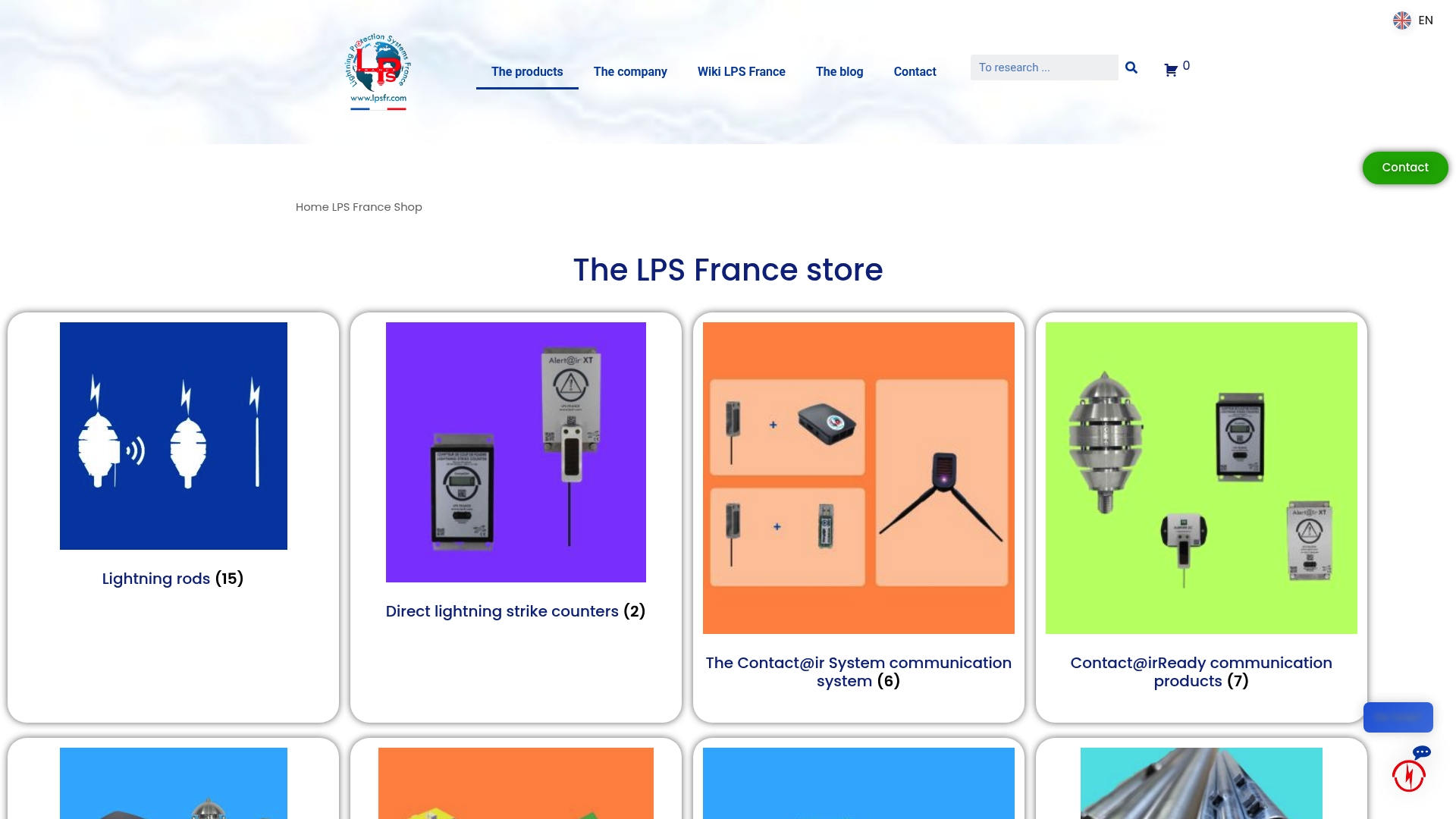
However, Contact@ir systems offer architectural flexibility with three connectivity modes tailored to your network and budget constraints. The LPS Manager platform centralizes monitoring, generates compliance reports, and optimizes maintenance for your distributed installations.
However, contact our experts for a personalized analysis of your needs, precise sizing, and a detailed quote including materials. We offer devices and monitoring tailored to your specific industrial context.
Frequently Asked Questions
What materials are recommended for highly corrosive industrial environments?
However, prioritize high-purity copper or 316L stainless steel for their exceptional durability in harsh environments. Copper offers superior conductivity, while stainless steel provides maximum mechanical strength. Avoid aluminum without appropriate protection in these conditions.
How do Contact@ir systems improve facility maintenance?
In contrast, they provide real-time monitoring with automatic alerts for impacts or defects. A complete, time-stamped history and a centralized interface are available via LPS Manager. This approach optimizes maintenance planning and ensures traceability and regulatory compliance without unnecessary travel.
What standards must be guaranteed for materials and devices used for lightning protection?
Specifically, the main standards are IEC 62305:2024 and NF C 17-102:2011 for conductor systems and materials. These are supplemented by IEC 62561 for earthing accessories. These standards define minimum performance levels, test methods, and mandatory installation criteria.