Blog
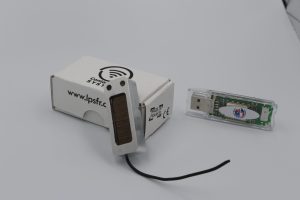
Testing a ESE: from the ground or with access to the lightning rod
Remote lightning rod testing: distinguish between ground-based diagnostics, connected monitoring, and on-site checks. Discover tailored control.
Remote lightning rod testing: distinguish between ground-based diagnostics, connected monitoring, and on-site checks. Discover tailored control.
Lightning risk calculation according to IEC 62305-2: prepare your data, discover LPS Designer Pro , and organize the validation of your study. Review the helpful steps.
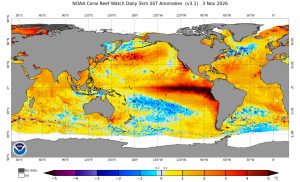
Floods in South America, a rainy October in Australia, drought in Indonesia: El Niño is nearing its peak, but its effects on thunderstorms remain highly variable. Lightning protection should be prioritized.
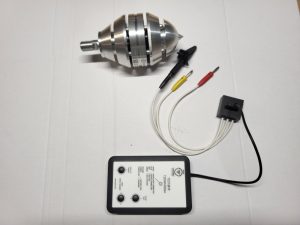
Prepare your ESE lightning protection quote: plans, mast, down conductors, grounding, testing, and monitoring. Identify the relevant components and discuss them with your LPS contact.
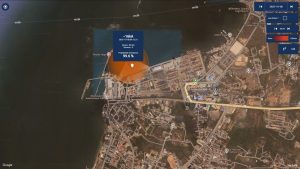
Lightning strike history of a site: Nsg density, lightning strike certificate, keraunic report. What LPS Strike Radar documents, and why it's important to anticipate.

Understand leakage current, Joule heating, and fault signal limitations. Prepare for professional diagnostics and monitoring of your surge protectors with LPS.
Discover how ground traces and lightning data illuminated Black River. Understand the limitations of the maps and prepare your post-incident analysis.

NOAA, WMO, and Météo-France forecasts for October 2026: El Niño 2026-2027 is heading towards a historic level. See what the maps show and the lightning monitoring to expect at your sites.
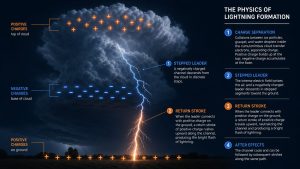
The cold weather doesn't eliminate all thunderstorms. Understand winter lightning, its scientific limitations, and prepare alerts for your site with LPS France.
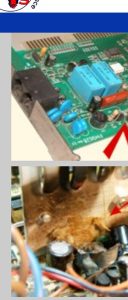
Protect building connections from lightning strikes: copper, fiber optics, and interfaces. Discover how to prepare a comprehensive study with LPS.
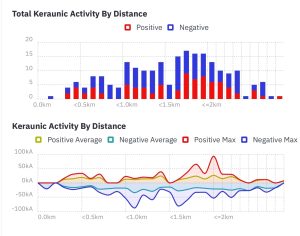
Lightning data from 2025 informs the decision, provided that Ng, Nsg, risk analysis and field monitoring are distinguished.
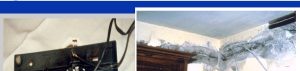
Following the fire at a care home in Corsavy, discover how to coordinate lightning protection, alert and evacuation of public buildings.
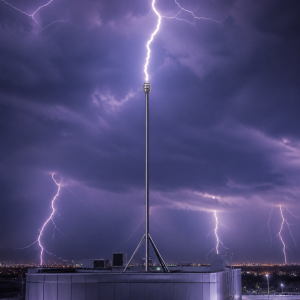
Early Streamer Emission (ESE) Lightning Rod: Role, Installation and Control according to NF C 17-102 When a site accommodates people, sensitive equipment or a
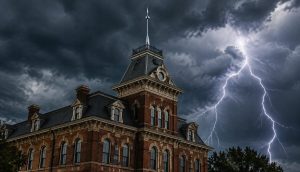
Protecting a historic building against lightning: IEC 62305 analysis, surge control and post-impact monitoring to preserve use.
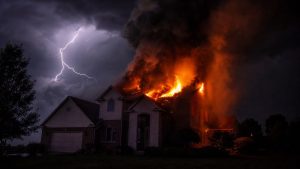
In York County, Pennsylvania, a lightning strike ignited the attic of a house. Analysis of the causes and lightning protection solutions for buildings.
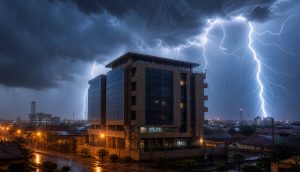
A scientific study explains why the lack of protection for buildings amplifies the consequences of lightning in sub-Saharan Africa, and what solutions exist.
The lightning-caused fires in Oregon serve as a reminder of how to protect water, telecom, and other critical infrastructure networks.
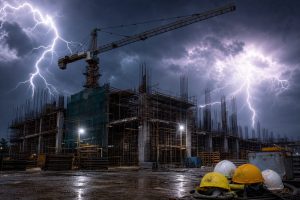
On July 27, 2026, a tree trimmer was struck by lightning and killed on a worksite in Whitewater, Wisconsin. This accident, supported by global, American, and French statistics, serves as a stark reminder of why every outdoor worksite requires a clear lightning protocol and appropriate detection tools.
Estimating the cost of a lightning protection system isn't simply a matter of asking, "How much does a lightning rod cost?" In reality, this investment often represents barely 1% to 2% of the total cost of a new building. This is a relatively modest sum considering the consequences
Furthermore, an effective inspection of a lightning protection system is not just a technical check-up. It is a methodical approach that ensures the safety of people and property. The process includes meticulous preparation, strict visual inspections, and precise electrical measurements to guarantee that the installation is
Furthermore, the components of a lightning protection system, also known as a lightning protection system (LPS), form a coordinated defense against both direct and indirect lightning strikes. Think of it as a coherent system that includes lightning rods, down conductors, grounding, and surge arresters. Each element is crucial
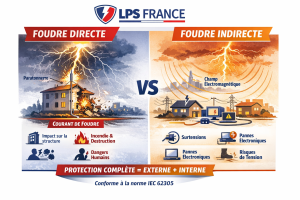
Direct or indirect lightning: why is the distinction essential? Furthermore, when discussing lightning protection, a common misconception arises: 👉 all lightning is considered a “direct strike.” In reality, we distinguish between two very different phenomena: direct lightning, which physically strikes a structure,
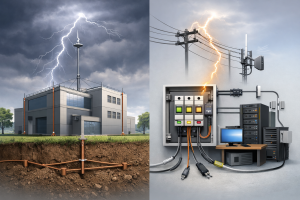
Furthermore, confusion between lightning rods and surge protectors is still very common, even among building and industrial professionals. However, the international standard IEC 62305:2024 (Protection against lightning) clearly distinguishes between these two devices, which have different roles, locations, and purposes.
Imagine a violent thunderstorm raging above your house. Lightning streaks across the sky, and you wonder if those gadgets sold online, promising to repel or dissipate lightning, can truly protect your roof and your family. The rods are high: a single strike can cause
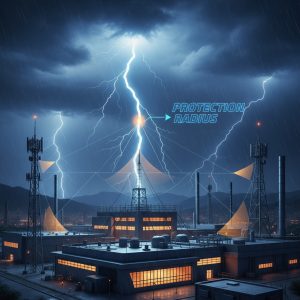
Introduction Lightning is one of the most powerful and destructive natural phenomena on our planet. Every second, approximately 100 lightning strikes the Earth's surface, generating considerable economic, human, and material impacts. Therefore, understanding the risks associated with lightning has become essential for protection
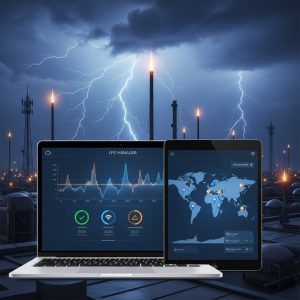
Managing lightning protection systems has long been a challenge for critical infrastructure managers. Between manual inspections, preventative maintenance, and regulatory compliance, the costs and time invested can quickly become substantial. LPS Manager radically transforms this approach by offering a platform

We often hear that lightning never strikes the same place twice. This expression has entered common parlance, but from a scientific point of view, it is completely false. Why does lightning strike the same place multiple times? Lightning always seeks the path..

Introduction Early streamer emitters (ESEs) differ from franklin simple rod in one essential parameter: the early streamer emission time (ΔT), that is, the time they gain in emitting an upward leader. The higher the ΔT, the greater the theoretical protection radius. Some

Introduction Early streamer emission (ESE) lightning rods are based on a key principle: triggering the upward leader more quickly than franklin simple rod . This time saving is called early streamer emission lead (ΔT). But to avoid commercial excesses and guarantee the safety of installations, the standard

Amazing lightning: ball lightning, sheet lightning, sprites and blue jets. Discover the extraordinary forms of electrical discharge.