
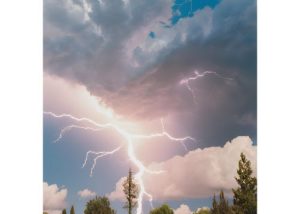
Clear-sky lightning, or "clear-sky lightning," is a fascinating and unusual meteorological phenomenon. Unlike traditional lightning that accompanies thunderstorms, this type of lightning occurs without any visible clouds nearby. How can we explain this mysterious manifestation of nature?
Origin and Explanation
Clear-weather lightning often occurs when lightning strikes are a considerable distance from observers, sometimes up to 40 kilometers or more. This phenomenon is linked to distant thunderstorms whose clouds are not visible on the horizon, but whose lightning can illuminate the clear sky.
Favorable Conditions
Several factors can promote the occurrence of lightning in clear weather:
- Unstable Atmosphere : An unstable atmosphere with differences in temperature and humidity can create conditions conducive to the formation of distant lightning.
- Topography : The presence of mountains or hills can mask storm clouds, leaving the sky appearing clear while lightning occurs behind these natural obstacles.
- Season and Time : This phenomenon is more frequent in summer and in the evening, when weather conditions are often ideal for thunderstorms.

Impacts and Precautions
Although visually spectacular, lightning in clear weather can be dangerous. Lightning can strike objects or people at surprising distances. It is therefore essential to remain vigilant and seek shelter even if the sky appears clear.
Conclusion
Lightning flashes in clear weather illustrate the complexity and beauty of meteorological phenomena. They remind us that nature always holds surprises and that it is important to understand the signals it sends us to ensure our safety.
To learn more about this fascinating phenomenon, visit Futura-Sciences .