
Lightning Standards Compliance Guide 2026: Installation and Maintenance
Ensuring lightning protection for an industrial or commercial site requires a thorough understanding of IEC 62305 and NFC 17-102 standards. Most lightning failures stem from neglected maintenance. This course guides you from initial site analysis to connected management, based on the updated 2026 standards and proven solutions.
Table of Contents
- Key points of the lightning standards compliance guide
- Introduction to lightning protection standards
- Essential prerequisites before installation
- Selection and sizing of compliant equipment
- Installation procedures compliant with standards
- Implementation of a connected maintenance system
- Common mirods and practical solutions
- Expected results and success indicators
- Discover LPS solutions for your lightning safety compliance
- What are the main standards for lightning protection?
- How can we ensure the effective maintenance of lightning rods?
- What are the risks of non-compliance with lightning standards?
Key points of the lightning standards compliance guide
| Point | Details |
|---|---|
| Mastering IEC 62305 and NF C 17-102 standards | Regulatory framework defining protection levels, tests and certified components for effective protection. |
| Select certified equipment suitable for the site | Communicating or non-communicating lightning rods, impact counters and fault detectors depending on geographical and budgetary constraints. |
| Apply compliant installation procedures | Optimal positioning, conductors and grounding strictly documented for technical validation. |
| Integrate connected maintenance and real-time alerts | Reduced intervention times and continuous traceability via Contact@ir and LPS Manager systems. |
| Use LPS Manager for management and traceability | Centralized files, automated reports, alert histories and proof of compliance for audits and insurance. |
Introduction to lightning protection standards
The IEC 62305:2024 standard imposes rigorous testing and precise requirements for lightning protection devices, including early streamer emission (ESE) lightning rods. It defines four levels of protection based on site exposure and equipment criticality. In France, the NF C 17-102:2011 standard supplements this framework by specifying installation and periodic verification procedures.
These two standards guarantee that each component, from the lightning rod to the down conductor, meets strict mechanical and electrical resistance criteria. Tests include resistance to lightning impulses, material durability, and connection reliability. Compliance is not limited to the initial installation. It requires annual maintenance and verification after each detected lightning strike.
Failure to comply with these standards exposes the operator to regulatory penalties, denial of insurance coverage, and, most importantly, risks of fire or property damage. Mastering these requirements is therefore the first step in securing an industrial or commercial site by 2026.
Pro tip: Always keep the certificates of conformity for each component in a shared digital folder. This speeds up external audits and simplifies future system expansions.
Essential prerequisites before installation
Before any intervention, a detailed site analysis is crucial. Identify high points, areas of maximum exposure, and existing metal structures. This mapping determines the number and type of lightning rods required. Consult site plans, note local weather conditions, and assess regional lightning intensity.
The inventory of standardized equipment to be used involves verifying the IEC 62305 and NF C 17-102 certificates for each item. Lightning rods, impact counters, conductors, and grounding connections must bear the required markings. Request laboratory test reports and complete technical data sheets from suppliers.
Team training is of paramount importance. Installers must master fastening protocols, conductor management, and earth resistance measurements. Specific training for connected systems (Contact@ir, Rout@ir, Contact@ir MD) ensures optimal commissioning and prevents network configuration errors.
Document every step. Prepare certificates of authenticity, annotated installation plans, and test procedures. This rigorous documentation will facilitate regulatory checks and integration into LPS Manager for long-term traceability.
Selection and sizing of compliant equipment
The choice of lightning rod depends on several technical criteria. The early flash time (∆T) determines the protection radius. Paraton@ir models offer early flash times of 10, 25, 45, or 60 µs, adapted to the different protection levels according to IEC 62305. For a high-rise industrial building, a high ∆T is recommended to cover the maximum perimeter.
Paraton@ir communicating lightning rods natively integrate telemetry capabilities via Contact@ir System. They transmit operating status, impact alerts, and diagnostic data. Ellips non-communicating models offer a cost-effective solution for sites where remote maintenance is not a priority. They require annual wired testing via Test@ir.
| Criteria | Paraton@ir (communicator) | Ellips (non-communicating) |
|---|---|---|
| Advance to priming | 10, 25, 45, 60 µs | 10, 25, 45, 60 µs |
| Remote diagnosis | Yes (Contact@ir System) | No (Test@ir required) |
| Real-time impact alerts | Yes (via Rout@ir or MD) | No (manual counter or addition Compt@ir) |
| Initial cost | Higher | Standard |
| Annual maintenance cost | Reduced (targeted visits) | Higher (routine visits) |
Lightning strike counters play a key role in traceability. Compt@ir displays the number of lightning strikes detected locally and can transmit this data via Contact@ir System. Alert@ir XT operates without a display or power supply, sending an immediate alert upon a strike. Alert@ir DC monitors the status of indoor surge protectors and reports any failures.
Pro tip: Always size the system for the next highest level of protection. This safety margin compensates for changes in site usage and enhances overall reliability during extreme storms.
The sizing must also take architectural constraints into account. A telecommunications tower requires a different approach than a logistics warehouse. Consult the standard's charts to determine the optimal number of lightning rods and their relative positioning.
Installation procedures compliant with standards
The lightning rod's positioning must adhere to strict guidelines. Install it at the highest point of the structure, avoiding any electromagnetic interference. Secure the base firmly using galvanized metal brackets that are resistant to vibration and weathering. Verify vertical alignment with a laser level to ensure maximum effectiveness.
- Mechanical fixing of the lightning rod to the mast or supporting structure with stainless steel bolts.
- Electrical connection of the down conductor (minimum cross-section 50 mm² copper) to the capture device.
- The conductor's path is in a straight line, without sharp bends, all the way to the dedicated ground connection.
- Installation of impact counters (Compt@ir or Alert@ir XT) on the descent driver at an accessible height.
- Installation of the grounding system with at least two earthing rods driven to a minimum depth of 3 meters.
- Earth resistance measurement (target value less than 10 ohms depending on protection level).
- Functional testing via Test@ir (wired diagnostics) and configuration of Contact@ir transmitters if connected architecture.
The rigorous tests required by IEC 62305:2024 include verifying electrical continuity, measuring the resistance of connections, and validating all connections. Document each measurement with geotagged and time-stamped photos.
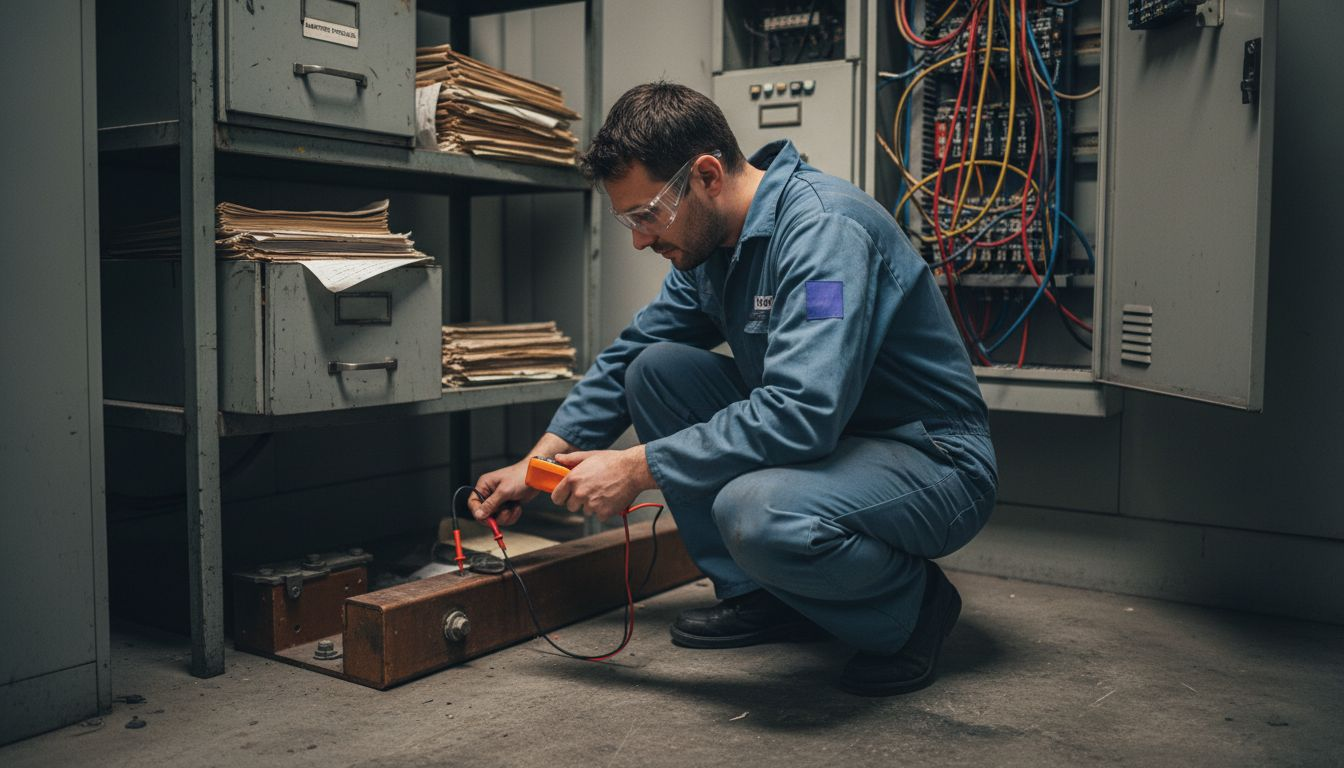
Immediately integrate the data into LPS Manager. Create a site folder, register the equipment with its serial numbers and certificates, and log the test results. This digital traceability facilitates future audits and serves as proof of compliance for insurance purposes.
Pro tip: Photograph each installation step from three different angles. These images serve as a reference during subsequent maintenance and speed up diagnosis in case of a detected non-conformity.
Implementation of a connected maintenance system
Contact@ir architectures offer three monitoring modes adapted to the constraints of each site. Dongl@ir enables mobile on-site diagnostics via Android smartphone, with a radio range of 80 meters. This solution is suitable for isolated sites without a reliable internet connection.
Rout@ir is a stationary architecture that collects data from multiple transmitters within a 300-meter radius. It logs events locally and transmits them to the LPS France cloud as soon as an internet connection is available (Wi-Fi, Ethernet, or mobile data). Local playback is performed via Bluetooth, ensuring data access even in the event of a network outage.
Contact@ir MD represents the most autonomous solution. This cellular IoT module integrates an international eSIM and communicates directly with the cloud via 4G/3G/2G. Alerts are sent in real time without delay, while product data is updated every 12 hours. This architecture eliminates any dependence on the customer's local network.
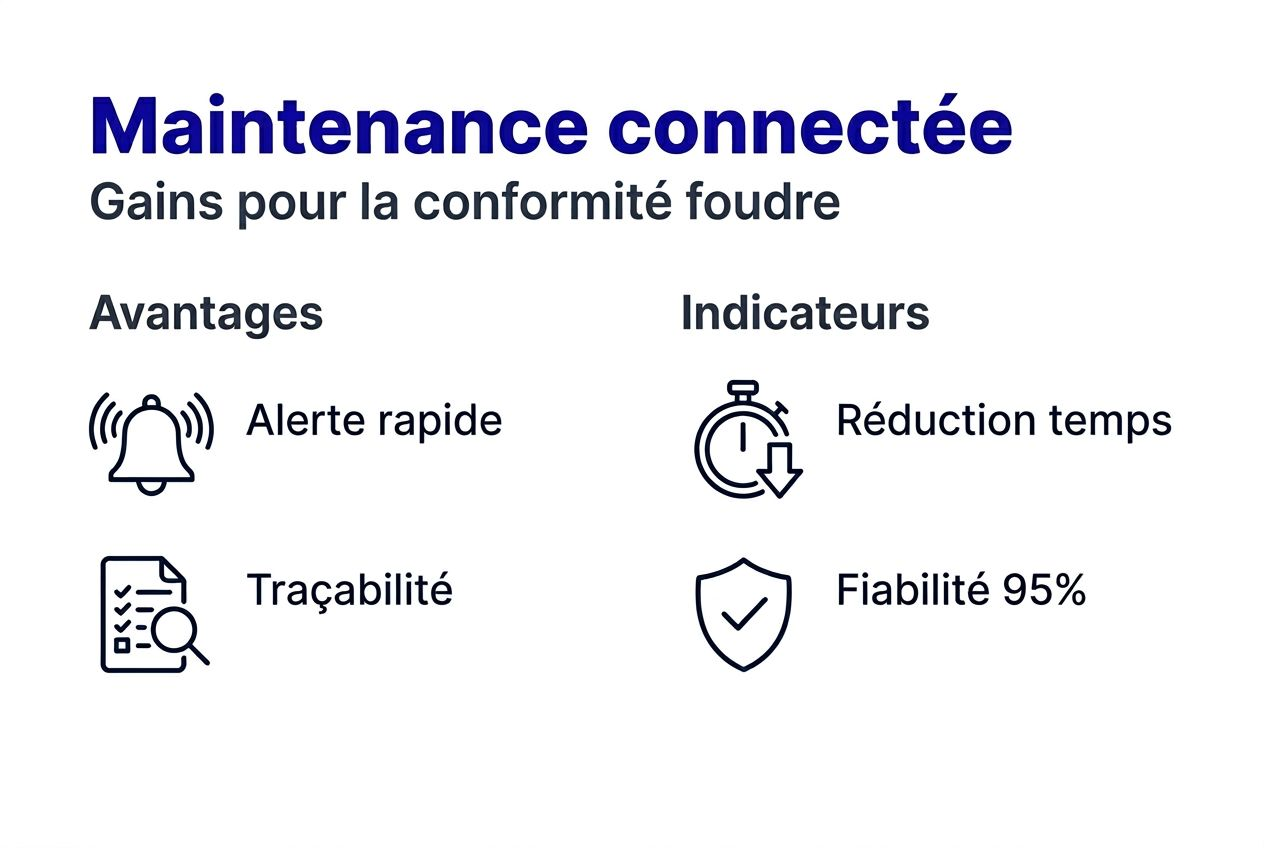
The measurable benefits of these connected systems include a 60% reduction in post-impact response time, early fault detection, and comprehensive event traceability. Automated reports generated by LPS Manager simplify regulatory compliance and relationships with insurers.
Pro tip: Always test RF (868 MHz) radio coverage before final installation of the Rout@ir. Use a Contact@ir mobile transmitter to identify dead zones and adjust the positioning of the receiving antenna.
Secure communications rely on redundant servers and strict access control via LPS Manager. Each user has rights configurable by the folder owner. For critical architectures, require detailed documentation of encryption protocols and authentication mechanisms.
Common mirods and practical solutions
Improper positioning of RF antennas compromises system reliability. Metal structures create obstructions that reduce the effective range. Always perform a coverage test before permanent installation. Install the Rout@ir at a height, clear of obstructions, with maximum direct line of sight to the Contact@irtransmitters.
Underestimating mobile network quality for Contact@ir MD results in data loss. Verify 4G/3G/2G coverage on-site with multiple operators before deployment. Prioritize locations with at least three bars of signal. In areas with poor coverage, point the antenna towards the nearest cell tower.
Failure to perform post-strike checks constitutes a major non-compliance. The NF C 17-102 standard mandates a complete check after each detected lightning strike. Without a smart meter, this obligation relies on human vigilance. The Compt@ir and Alert@ir XT systems automate this alert, triggering an immediate notification in LPS Manager.
Fragmented document management slows down audits and complicates proof of compliance. Centralize all certificates, test reports, installation photos, and service histories in a single folder on LPS Manager. This consolidation accelerates insurance claims and ensures regulatory traceability for the legally required retention period.
Expected results and success indicators
A system compliant with IEC 62305 and NF C 17-102 standards guarantees effective protection, validated by certificates issued after testing. The equipment bears the required markings, and earth resistance measurements meet the standard thresholds. External audits confirm technical and documentary compliance.
| Indicator | Target | Measurement method |
|---|---|---|
| Impact detection rate | ≥ 95 % | Historical Contact@ir vs. local weather data |
| Average post-impact intervention time | < 4 hours | LPS Manager alert timestamp vs. field intervention |
| Monitoring system availability | ≥ 99 % | Rout@ir or Contact@ir MD connection logs |
| Document compliance audits | 100 % | LPS Manager files completeness during audits |
Real-time alert detection and reporting achieve 95% reliability with the Rout@ir and Contact@ir MD architectures. This rate depends on the quality of radio and network coverage. False positives remain below 2% thanks to the filtering algorithms integrated into the impact counters.
LPS Manager automatically generates quarterly and annual maintenance reports. These documents include a complete history of alerts, interventions performed, earth resistance measurements, and geolocated photos. Time savings on document production reach 70% compared to manual management.
Significantly reducing response time after a lightning strike protects critical equipment. Instant alerts enable targeted inspections within hours of the impact, before secondary damage develops. This rapid response lowers repair costs and minimizes business interruptions.
Discover LPS solutions for your lightning safety compliance
LPS France offers a complete range of early streamer emission (ESE) lightning rods certified to IEC 62305 and NF C 17-102. The Paraton@ir and Ellips cover all protection levels with advances from 10 to 60 µs. Made in France, rigorous quality control, and laser marking guarantee the traceability of each component.
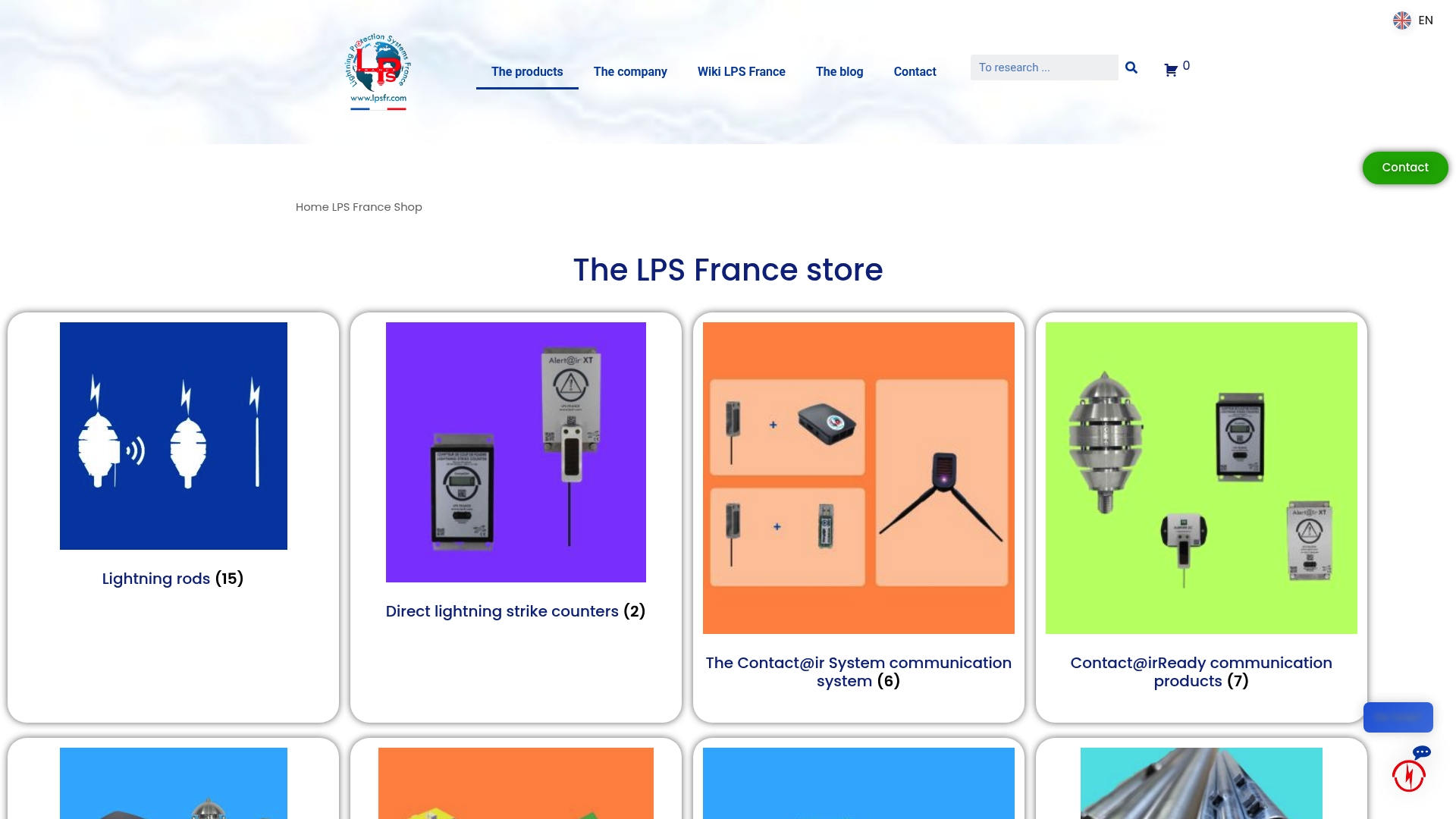
The communication system Contact@ir transforms maintenance into a proactive process. The Dongl@ir, Rout@ir , and Contact@ir MD architectures adapt to the connectivity constraints of each site. Real-time alerts, impact history tracking, and remote diagnostics reduce operating costs and ensure compliance.
Connected management via LPS Manager centralizes all lightning protection data. This multi-site platform generates automated reports, archives certificates, and facilitates audits. The Pro, Expert, and Enterprise editions offer advanced features, including API access for BMS/SCADA integration.
What are the main standards for lightning protection?
What are the main standards for lightning protection?
IEC 62305:2024 and NF C 17-102:2011 are the major references in France and internationally. They define the design, installation and maintenance requirements for external and internal protection systems.
How can we ensure the effective maintenance of lightning rods?
Using connected systems like Contact@ir allows you to receive real-time alerts for impacts or defects. Relying on LPS Manager for comprehensive monitoring and automated report generation ensures regulatory traceability.
What are the risks of non-compliance with lightning standards?
Risks include fire, property damage, and prolonged business interruptions. The operator is legally liable, with possible regulatory penalties and denial of insurance coverage.