
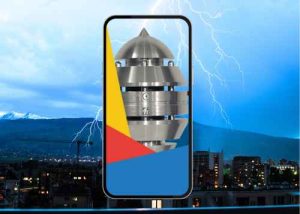
Lightning rods play a crucial role in protecting buildings and infrastructure from lightning. They capture the electrical energy generated by lightning and conduct it to the ground, minimizing the risk of fire, property damage, and injury. However, to remain effective, lightning rods must be regularly maintained according to applicable standards. In this article, we will explore the maintenance steps for lightning rods, with a particular focus on the use of Paraton@ir connected Contact@ir® System communication option and the LPS Manager application .
The Importance of Lightning Rod Maintenance:
Lightning rod maintenance is crucial because these devices are subjected to harsh environmental conditions. Lightning, inclement weather, corrosion, and mechanical impacts can all affect their effectiveness over time. Proper maintenance ensures that lightning rods remain operational, protecting structures from lightning and thus reducing risks to people and property.
Applicable Standards:
Lightning rod maintenance must be carried out in accordance with applicable standards, such as NF C 17-102:2001 in France. These standards define the specific requirements for the inspection, testing, and maintenance of lightning rods to ensure their proper functioning. Compliance with these standards is essential to guarantee the safety of the occupants of a building or structure.
Paraton@ir Connected Lightning Rods:
Paraton@ir connected lightning rods , combined with the optional Contact@ir® System, are modern devices that integrate sensors and communication technologies to monitor the lightning rod's status in real time. They allow building owners to receive precise information on the condition of their lightning rods, greatly facilitating preventative maintenance.
Lightning Rod Maintenance Steps with
Paraton@ir and LPS Manager 1. Regular Visual Inspection
The first maintenance step is a regular visual inspection of the lightning rod. This inspection must be carried out at least once a year or after a lightning strike, in accordance with applicable standards. Paraton@ir connected facilitate this task by providing real-time information on the lightning rod's condition via the LPS Manager app . Users can thus visually check the device's condition remotely, reducing the risks associated with climbing onto the roof.
2. Functional Tests
In addition to visual inspection, it is essential to regularly test the lightning rod's functionality. Tests must be carried out in accordance with applicable standards, once a year or after a lightning strike. Paraton@ir connected can be remotely monitored for functional testing, which greatly simplifies this task.
3. Preventive Maintenance
Preventive maintenance is a crucial step in ensuring the longevity and effectiveness of lightning rods. This can include replacing defective parts, lubricating grounding mechanisms, cleaning components, and much more. The LPS Manager application provides specific information on the stresses experienced by the lightning protection system and the operation of Paraton@ir rods, allowing for targeted system maintenance and upkeep.
4. Inspection and Maintenance Reports.
Documentation is a crucial aspect of lightning rod maintenance. The LPS Manager application is the most efficient tool for automatically generating inspection and maintenance reports that record inspections, tests, and interventions performed. These reports can be saved and shared, thus demonstrating compliance with standards and facilitating maintenance tracking over time.
Conclusion:
Maintaining lightning rods and lightning protection systems as a whole is an essential component of building and infrastructure safety. Paraton@ir connected Contact@ir® System communication module and the LPS Manager application, simplify this process by providing real-time information, automating tests, and generating inspection and maintenance reports. By adhering to current standards and utilizing available modern tools, building owners can ensure the continuous protection of their property and occupants against lightning hazards.