
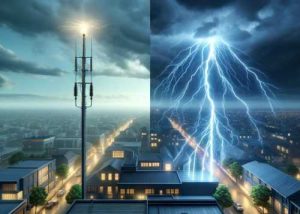
Yes, an early streamer emission (ESE) lightning rod is generally considered more effective than a simple pointed lightning rod for several reasons:
Protection Range
Early streamer emission (ESE) lightning rods offer a greater protection range than single-point lightning rods. The protection range of an ESE is determined by its radius of protection, which can extend to several tens of meters around the installation point. In comparison, a single-point lightning rod protects a much smaller area, often limited to a height equal to its own.
By increasing the protection range, ESEs reduce the number of lightning rods needed to cover a large installation. This results in savings on the overall cost of the lightning protection system, as well as simplifying installation and maintenance.
Protection Range
Proactive lightning rods (PDAs) are equipped with devices capable of generating proactive ionization in the atmosphere. This initiation technology creates an ionized path to the storm cloud even before lightning strikes. This contrasts with simple, pointed lightning rods, which passively wait for lightning to strike before channeling it to the ground.
A PDA's ability to anticipate and attract lightning reduces the likelihood of uncontrolled strikes on protected structures. This anticipation improves overall safety and reduces the risk of damage to critical infrastructure.

Effectiveness in Stormy Weather
Weather conditions influence the effectiveness of lightning protection systems. Lightning protection devices (LPDs) are designed to perform particularly well in intense thunderstorm conditions, where the risks of multiple strikes and indirect lightning strikes are high.
In high-risk environments, such as industrial sites, communication facilities, and densely populated areas, the use of LPDs can provide added peace of mind due to their ability to handle more complex and dangerous lightning situations.
Standards and Compliance
Lightning protection devices (LPDs) often comply with stringent performance standards, such as NFC 17-102:2011 and IEC 62305 guidelines. These standards define specific performance criteria for lightning protection systems, ensuring that LPDs are tested and certified for effectiveness.
Compliance with international standards is crucial for projects where safety and reliability are top priorities. Users can be confident that the LPDs have been rigorously tested and meet the performance requirements necessary to effectively protect structures and people.

Conclusion
In summary, Early Streamer Emitter lightning rods offer several advantages over simple tip lightning rods, including a wider protection range, proactive priming technology, better performance in harsh weather conditions, and compliance with standards strict. These factors combined make ESEs a more effective lightning protection solution for many applications.
For specific advice tailored to your needs, please contact us by email at info@lpsfr.com. We will be happy to assist you in choosing and installing your lightning protection system.