
Indeed, every installer in Europe knows that the slightest error in lightning protection can have serious consequences for a site's electrical safety. Current regulations, such as the French decree of October 4, 2010, and the NF C 15-100-1 standard, mandate the installation of lightning protection devices within strict timeframes for many buildings. This article explains the standards, installation steps, and required documentation to help avoid penalties and civil liability.
Table of Contents
- Lightning protection: definition and key concepts
- Standards and regulations applicable in France and Europe
- Mandatory devices and installation requirements
- Role of installers and legal responsibilities
- Sanctions, risks and regulatory non-compliance
Key Points
| Point | Details |
|---|---|
| Lightning protection | It is essential to put in place adequate protection systems to minimize the risks associated with lightning strikes. |
| Standards and regulations | Complying with standards such as NFC 17-102 and IEC 62305 is mandatory to ensure the safety and conformity of installations. |
| Risk analysis | Conducting a thorough risk analysis is crucial to determining the necessary equipment and avoiding non-compliance. |
| Regular maintenance | The installations must undergo periodic maintenance to ensure their continued effectiveness and meet regulatory requirements. |
Lightning protection: definition and key concepts
Lightning protection is a set of devices and measures designed to protect buildings, facilities, and people from damage caused by lightning strikes. This system includes physical elements ( lightning rods , conductors, grounding) and connected monitoring components.
Furthermore, a lightning strike represents a natural electrical discharge of several million volts, capable of causing catastrophic damage. Without adequate protection, this event can destroy electrical equipment, start fires, or threaten human lives.
The three pillars of lightning protection
Furthermore, effective protection relies on three essential components:
- Capture : the lightning rod catches the lightning before it reaches the structure
- Guidance : Downflow conductors direct the current safely
- Dissipation : Grounding systems dissipate energy into the ground
Furthermore, each element plays a critical role. Without any one of them, the system does not function correctly.
Types of lightning rods available
Note that two main categories exist on the market:
In general, early streamer emission (ESE) lightning rods capture lightning more effectively thanks to an emission advance measured in microseconds (µs). The Paraton@ir offers models with emission advances of 10, 25, 45, and 60 µs.
In practice, standard lightning rods operate without early warning. The Ellips offers several variants adapted to different levels of protection.
In practical terms, the principles of lightning protection determine the choice between these two types according to your specific needs.
As a reminder, here is a comparative table of the main types of lightning rods to facilitate equipment selection:
| Lightning rod type | Main advantage | Recommended use | Advance to priming |
|---|---|---|---|
| Primed (ESE) | Wide protection radius | Sensitive or high-value sites | 10 to 60 µs depending on the model |
| Standard | Easy to install | Common or low-risk structures | No specific advance payment |
Key concepts to remember
It should be noted that the lead time to ignition (Delta T) measures a lightning rod's ability to initiate the lightning arc earlier than any point in the structure. A short lead time (10–25 µs) offers better protection, particularly for sensitive installations.
In reality, the protection radius defines the area around the lightning rod covered by the system. The taller the lightning rod, the larger this radius. It also depends on the type and the early streamer emission (ESE) time.
Indeed, properly sized lightning protection eliminates more than 99% of the risk of direct impact on the protected structure.
However, grounding is just as important as the lightning rod itself. grounding , even with the best lightning rod, compromises the overall effectiveness of the system.
Connected monitoring and maintenance
However, remote monitoring via Contact@ir System allows you to monitor the status of your installation in real time. The connected products send alerts immediately after an incident, facilitating mandatory checks.
On the other hand, this connected approach transforms preventive maintenance into predictive maintenance, reducing costs and intervention times.
However, Pro Tip: Start with a risk assessment specific to your site (geographic location, height, environment) before choosing your protection system.
Standards and regulations applicable in France and Europe
For example, lightning protection in France and Europe is governed by strict standards that guarantee the safety of installations and people. These standards define the technical requirements, design methods, and mandatory verification procedures for all protection systems.
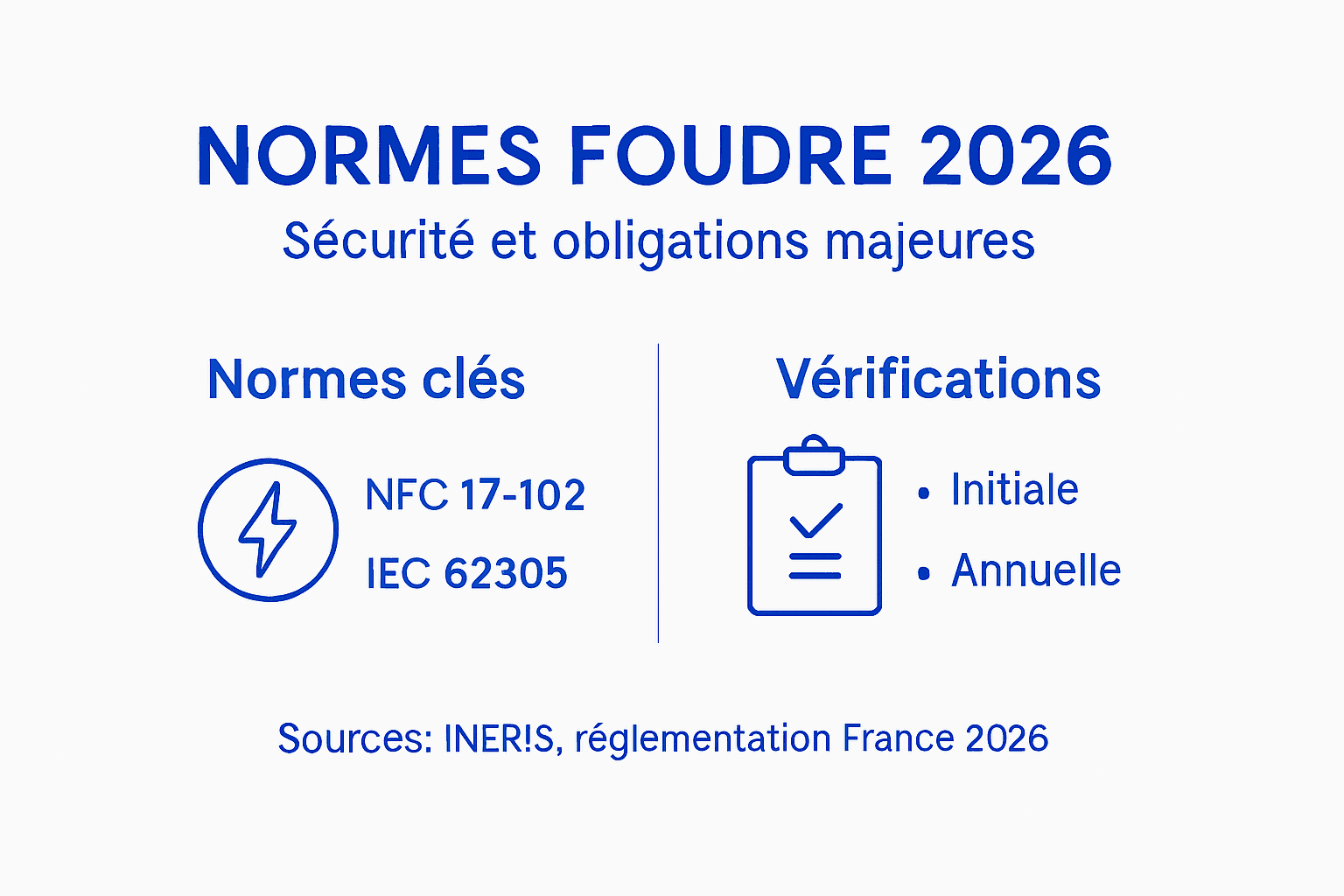
In France, two main standards apply: NFC 17-102 and IEC 62305. These technical documents define protection criteria, efficiency levels, and maintenance requirements. Failure to comply with these standards exposes users to legal risks and civil liability.
The main standards
In particular, three standards structure the legal obligation:
- NFC 17-102:2011 : French standard that applies mainly to fixed installations and requires strict compliance.
- IEC 62305:2024 : Harmonised international standard, recognized in more than 80 countries, including the European Union
- IEC 50164 : supplementary standard covering individual protective components (conductors, earthing points, accessories)
In fact, the difference between these standards lies in their scope of application and their approach to risk analysis.
Obligations for classified installations
In this regard, facilities classified for environmental protection (ICPE) must comply with the amended decree of October 4, 2010. This decree mandates:
- A documented and up-to-date lightning risk analysis
- A technical study of the required devices
- Periodic checks should be carried annually or after each major weather event.
In this context, INERIS provides a detailed guide for the compliance of these installations, including analysis methods and regulatory thresholds.
Protection levels and risk analysis
In other words, the IEC 62305-2:2024 defines four levels of protection corresponding to different levels of risk. Each level requires specific lightning rods with an appropriate early streamer emission (ESE) time.
In other words, a properly conducted risk analysis reduces direct impacts by 99% and identifies hidden sources of failure.
First, the assessment begins by identifying the sources of risk: number of storms per year, lightning density, type of structure, value content, and consequences of a failure (loss of lives, damage, business interruption).
Next, here is a summary table of protection levels according to the IEC 62305 standard:
| IEC Level 62305 | Risk covered | Lightning rod standard height | Frequent application |
|---|---|---|---|
| Level I | Maximum risk | Up to 60 m | Strategic sites, risky storage |
| Level II | High risk | Up to 45 m | Public buildings, public access buildings |
| Level III | Medium risk | Up to 30 m | Office buildings |
| Level IV | Low risk | Up to 20 m | Private residences |
Verification and maintenance requirements
Finally, all protected installations must undergo an initial inspection after commissioning, followed by annual and post-event . These checks ensure that the devices remain effective.
It should be noted that communicating products such as Paraton@ir and Compt@ir facilitate this traceability by automatically recording impacts and detected events, reducing maintenance oversights.
Note that Pro tip: Document each verification and each lightning strike in a centralized register accessible via LPS Manager to demonstrate your regulatory compliance in the event of an inspection.
Mandatory devices and installation requirements
Indeed, lightning protection is not optional for certain categories of buildings and installations. Since August 2025, the NF C 15-100-1 mandates the installation of specific devices in healthcare facilities, public buildings, commercial premises, and high-traffic public access buildings (ERP).
The installations must be completed within a maximum of two years following a formal lightning risk assessment. This requirement applies to both lightning rods and surge protectors, configured according to your geographical location and sensitive equipment.
The required protective devices
Every compliant system comprises three categories of devices:
- Lightning rods : capture direct lightning before it reaches the structure (mandatory if high risk)
- Surge protectors : protect indoor electrical installations against power surges (now mandatory for certain buildings)
- Equipotential bonding : connects conductive elements to prevent dangerous potential differences
The main surge arrester is mandatory in health, public, tertiary and ERP establishments equipped with a lightning rod or located in a high risk zone.
Installation steps as per regulations
The implementation must follow a structured procedure:
- Lightning risk analysis : assessing the sources of danger and potential consequences
- Detailed technical study : define the type and number of devices required
- Installation : comply with manufacturing and grounding standards
- Initial check : verify conformity before commissioning
- Regular maintenance : perform annual checks
The compliance steps guide you through each phase of the project, from design to commissioning.
Grounding requirements
Grounding of less than 10 ohms to properly dissipate lightning current into the ground.
Insufficient grounding renders all other devices ineffective, even the best lightning rods.
The choice of grounding type (rods, strips, electrodes) depends on the soil conductivity and the structure to be protected.
Compliance for classified installations
Installations classified for environmental protection (ICPE) are subject to stricter regulations. The risk analysis and technical study must be documented and kept for the entire duration of operation.
Mandatory checks after installation: initial, annual, and post-event in case of a major lightning strike.
Pro tip: Plan your compliance now by consulting a certified installer and documenting each step to avoid costly catch-up work in 2026.
Role of installers and legal responsibilities
The lightning protection installer is not simply a technical service provider: they are a stakeholder responsible for public safety. In France, the law imposes strict obligations on professionals who design and install these critical systems.
From the moment an installer accepts a job, they become responsible for ensuring the installation complies with applicable standards and regulations. This responsibility is both civil and criminal in the event of a failure to comply.
Legal obligations of the installer
The decree of October 4, 2010 specifies that every installer must:
- Carry out the installations in accordance with an approved risk analysis
- Strictly adhere to the validated technical study before installation
- Ensuring the effectiveness of devices to protect people and property
- Document each step with detailed technical reports
- Ensure initial checks before commissioning
These obligations are not negotiable: they aim to prevent fires, explosions and electrical accidents.
Liability in case of an accident
If a faulty installation causes damage (fire, loss of life, property damage), the installer may be held liable. This includes:
- Civil lawsuits for compensation of victims
- Criminal prosecution for negligence or recklessness
- Provision of insurance and experts
The ten-year building warranty does not always cover protective devices: the installer must therefore justify its conformity.
Mandatory documentation to be kept
Every installer must archive the following for at least 10 years:
- Lightning risk analysis reports
- Complete and validated technical study
- Product information sheets (certifications, standards)
- Initial inspection reports
- History of annual audits
- Evidence of maintenance and events (lightning strikes)
This documentation constitutes proof of compliance in the event of an audit or dispute.
Maintenance: a shared responsibility
The installer is responsible for the initial commissioning. After that, it is the owner's responsibility to maintain compliance through annual checks and appropriate maintenance .
However, the installer must advise the owner of their maintenance obligations and provide a clear maintenance plan.
A properly documented installation protects the installer and ensures the safety of occupants for decades.
Pro tip: Invest in ongoing training on the 2025 standards, use tracking tools (like LPS Manager) to automatically archive your interventions, and take out liability insurance tailored to your business.
Sanctions, risks and regulatory non-compliance
Ignoring legal obligations regarding lightning protection is not mere negligence; it poses a major risk to both your safety and your finances. The consequences of non-compliance extend far beyond administrative fines.
In France, unprotected or poorly maintained installations are responsible for serious incidents every year. These events cause deaths, serious injuries, and catastrophic material damage, often costly and irreversible.
Direct physical risks
A site without lightning protection exposes its occupants to several dangers:
- Fires : Lightning can trigger fires that are impossible to control quickly
- Explosions : in ATEX zones or industrial sites, the risk is extreme
- Electrical damage : destruction of critical systems (electricity, communications, data)
- Business interruptions : prolonged shutdowns causing financial losses
- Health risks : electrocution, severe burns and staff deaths
Each of these risks can lead to disaster.
Regulatory and criminal consequences
Failure to comply with these obligations may result in multiple penalties:
- Formal notices from the administrative authority
- Administrative fines that can reach tens of thousands of euros
- Criminal proceedings against the leaders or officials
- Administrative closure of the facility
- civil liability towards victims
For classified facilities, inspectors regularly verify compliance. Each documented deficiency can lead to legal action.
Civil liability and damages
If a defect causes a loss, the risks of significant property damage and pollution are added to legal liabilities. Insurers may refuse to cover a loss resulting from non-compliance.
The victims (injured employees, affected neighbors, impacted customers) can directly sue the owner or operator for damages.
Hidden costs of non-compliance
Beyond direct fines, non-compliance generates:
- Expert fees and legal proceedings
- Drastic increase in insurance premiums
- Loss of commercial credibility and contracts
- Mobilization of management teams
- Post-disaster reconstruction (very high costs)
Up-to-date compliance costs a fraction of what you will pay in fines, claims, and liability combined.
Traceability: your best defense
Documenting every intervention, every inspection, and every lightning strike protects you legally. Tools like LPS Manager automatically record events with timestamps, creating irrefutable proof of due diligence.
Pro tip: Update your protection now: a compliant installation before 2026 avoids costly emergency work and gives you the peace of mind of solid legal coverage.
Ensure the compliance and safety of your lightning protection installation today
Faced with the legal requirements for lightning protection in 2026 , it is vital to reduce physical and regulatory risks through a comprehensive and reliable solution. Risk analysis, compliance with standards such as NFC 17-102 and IEC 62305, and connected maintenance are essential steps to protect your buildings, equipment, and, above all, people.
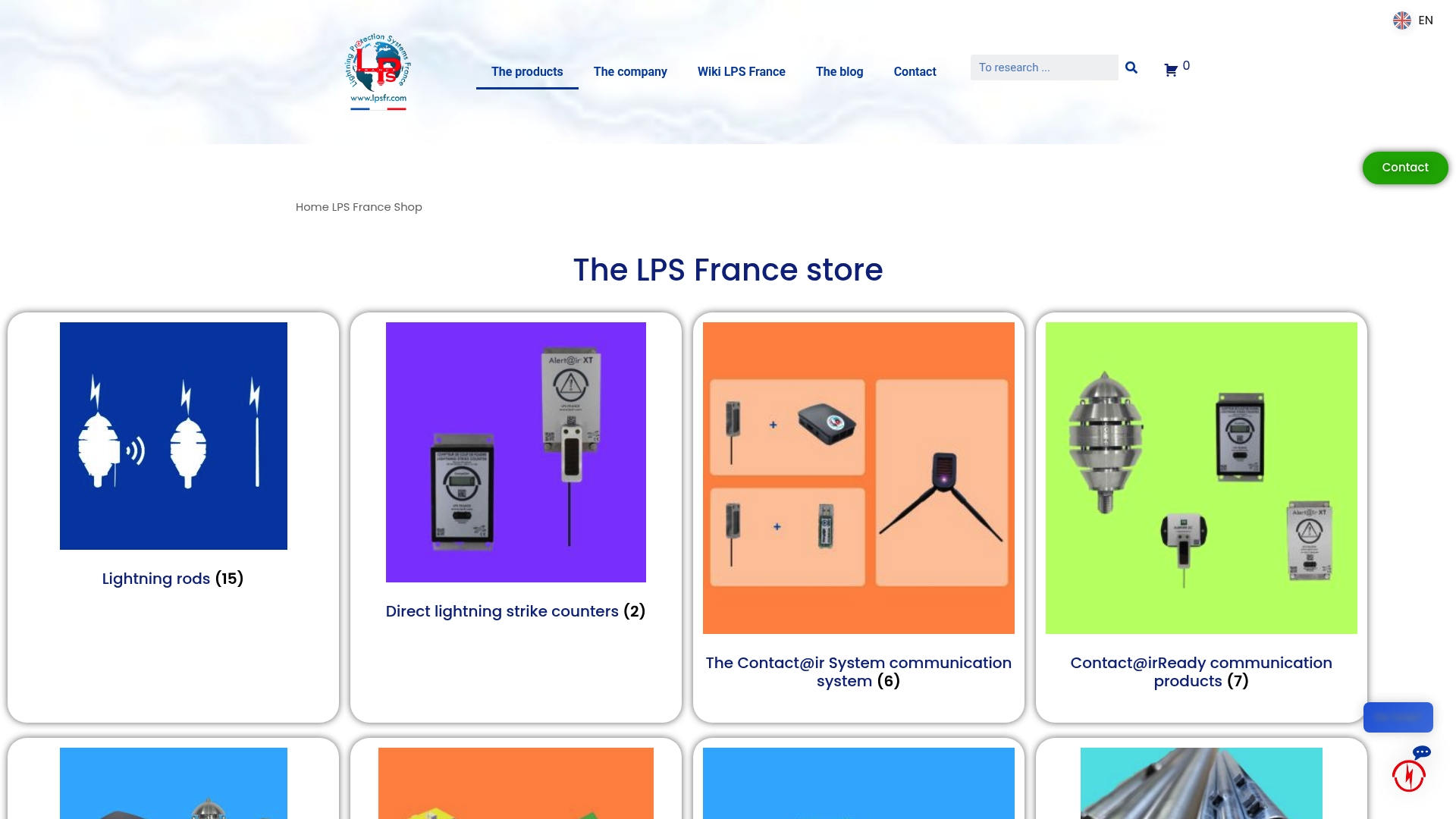
LPS FRANCE supports you with its innovative Paraton@ir and Ellips , suitable for all configurations. Thanks to the Contact@ir System and the LPS MANAGER , manage your compliance in real time, benefit from instant alerts, and ensure simplified maintenance tracking. Discover our solutions now and prepare your installation for a worry-free future. Consult our complete catalog in our online store and stay ahead of regulations with high-performance, certified lightning protection.
Don't let the risks of non-compliance threaten your safety and finances. Take action with LPS FRANCE and ensure comprehensive lightning protection for your site today.
Frequently Asked Questions
What are the legal obligations regarding protection against lightning?
Legal obligations include conducting a lightning risk analysis, a technical study, the compliant installation of protection devices, and the documentation of each step for 10 years.
What is the responsibility of an installer of lightning protection systems?
The installer is responsible for ensuring that the installations comply with applicable standards, and must guarantee the effectiveness of the devices as well as document initial and periodic checks.
What are the risks involved in the event of non-compliance with lightning protection standards?
Non-compliance can lead to administrative sanctions, criminal prosecution, and civil liability in the event of an accident, thus exposing oneself to significant fines and repair costs.
How is the maintenance of a lightning protection system carried out?
Maintenance involves annual checks, an initial inspection after commissioning, and monitoring of lightning strikes to ensure the proper functioning of the devices throughout their lifespan.