
Indeed, finding the ideal solution to protect an industrial site from lightning requires much more than simply choosing a lightning rod . With the increasing frequency of thunderstorms in France, the approach based on the IEC 62305 standard offers a recognized methodology for accurately analyzing risks and ensuring long-term compliance. This practical guide details the key steps for selecting, installing, and monitoring your system according to the standards, optimizing safety and monitoring across all your sites.
Table of Contents
- Step 1: Identify the specific needs of the site
- Step 2: Select the appropriate protection system according to the standards
- Step 3: Install the equipment and integrate connected monitoring
- Step 4: Verify functionality via tests and LPS Manager
Quick summary
| Key point | Explanation |
|---|---|
| 1. Identify the specific needs | Assess your site's location and infrastructure for informed decisions on lightning protection. |
| 2. Follow the applicable standards | Consult the NF C 17-102 and IEC 62305 standards to choose a compliant and appropriate protection system. |
| 3. Prepare accurate documentation | Document the site's characteristics and technical choices to facilitate future management and audits. |
| 4. Establish a maintenance schedule | Schedule regular checks and diagnostics to ensure the protection system is functioning properly. |
| 5. Test the installation and monitoring | Confirm the effectiveness of the installation through testing and ensure that alerts are working correctly in LPS Manager . |
Step 1: Identify the specific needs of the site
Therefore, before choosing your lightning protection system, you must understand precisely what your site requires. This step determines the effectiveness of your entire installation and guides your future decisions.
Start by gathering information about your environment. Where is your building located? What is the local climate like? What is the average frequency of thunderstorms in your area? This contextual data directly influences the level of risk you are exposed to.
Next, analyze your infrastructure. What is the height of your buildings? Do you have metal structures, water towers, pylons, or antennas? Is there any sensitive equipment (servers, industrial automation systems, telecommunications equipment) inside? The nature and sensitivity of your installations will determine the type of lightning rod and accessories to install.
Furthermore, you must also assess the accessibility of your site. Will technicians be able to easily access the lightning rod for annual inspections? Is it a densely built urban environment, an isolated area, or an industrial site? Accessibility influences the choice between local monitoring via Test@ir or connected monitoring via Contact@ir System .
Furthermore, the lightning risk assessment according to the IEC 62305 standard provides a recognized methodology for structuring this quantitative and qualitative analysis.
Furthermore, consider your resources. Do you have reliable internet connectivity on-site? Do you prefer a one-time diagnostic without additional infrastructure, or do you want real-time alerts in case of an impact? This question determines your architecture: Dongl@ir for a mobile solution, Rout@ir for multi-site historical data, or Contact@ir MD for standalone IoT monitoring.
Note that accurately identifying your needs from the outset avoids costly adjustments later and ensures lasting compliance with standards.
In general, remember your regulatory and insurance context. Some sectors (hospitals, data centers, sensitive facilities) require strict compliance with NF C 17-102 or IEC 62305:2024. Check with your insurers what proof of maintenance and events they require.
In practice, Pro tip: Document your site characteristics now (height, geographical location, type of equipment) in a folder or shared file: this data will serve as a reference for technicians and will facilitate future configuration in LPS Manager .
Step 2: Select the appropriate protection system according to the standards
In practical terms, you have identified your needs. Now, it's a matter of choosing a system that meets your specific requirements and complies with current standards. This choice will determine the durability and effectiveness of your protection.
Start by consulting the applicable standards. In France, standard NF C 17-102 and the decree of October 4, 2010 are mandatory for sensitive installations. Internationally, IEC 62305 guides the sizing of systems based on the risks identified during your preliminary analysis.
Remember that the IEC 62305 standard offers several levels of protection (I to IV) depending on the criticality of your site. A hospital or data center will require level I or II, while a less critical structure can accept level III or IV. This classification guides the choice of your lightning rods and accessories.
Note that here is a summary of protection levels according to IEC 62305:
| Level of protection | Site review | Recommended lightning rod type |
|---|---|---|
| I | Hospital, data center, critical infrastructure | Advanced ESE, Paraton@ir 60 µs |
| II | Sensitive sector, industry | Standard ESE, Paraton@ir 25-45 µs |
| III | Offices, medium-sized buildings | Ellips or Paraton@ir 10-25 µs |
| IV | Structures with limited exposure | Non-communicating solution |
In reality, you now need to select your equipment. For lightning rods, you have the choice between communicating and non-communicating solutions. Lightning rods with early streamer emission (ESE) devices, such as the Paraton@ir Ellips range offers similar non-communicating versions.
Indeed, also consider your grounding system. You will need appropriately sized down conductors and a technical study determining the required protection levels, particularly for earthing rods and mesh adapted to the local soil.
However, adding a connected monitoring system completes your protection. Here are the three main architectures:
However, here is a summary of the key criteria for choosing a connected monitoring solution:
| Main criterion | Dongl@ir | Rout@ir | Contact@ir MD |
|---|---|---|---|
| Connectivity required | No internet connection | Wi-Fi or Ethernet | IoT Mobile Network |
| Typical use | Spot diagnosis | Multi-point sites | Isolated/offline sites |
| History of events | Not registered | Centralized registration | Self-recording |
| Real-time alerts | Not available | Yes, via LPS Manager | Yes, via LPS Manager |
| Easy installation | Very easy | Network configuration request | Installation on equipment |
| Suitable for industrial/isolated sites | Yes | Yes (if networked) | Very suitable |
- Dongl@ir : local diagnostics without permanent infrastructure, ideal for isolated sites or one-off checks
- Rout@ir : multi-point history tracking with real-time alerts if internet connectivity is available
- Contact@ir MD : IoT monitoring via mobile network for sites without available LAN
In contrast, each architecture integrates into LPS Manager, your centralized management and regulatory compliance platform.
However, the choice of protection level and equipment must balance regulatory compliance and adaptability to your specific context.
For example, remember to check product availability in France and adherence to delivery deadlines. LPS France offers fast manufacturing (24-48 hours) for its standard product lines.
In particular, Pro tip: Document your technical choices (level of protection, lightning rod model, monitoring architecture) in LPS Manager from the design stage; this facilitates audits, compliance reports, and subsequent developments.
Step 3: Install the equipment and integrate connected monitoring
In particular, your protection system is designed. Now, it's time for installation and commissioning. This step makes your protection system a reality and activates real-time monitoring of your equipment.
Start by preparing the site. Check that all equipment has arrived according to your order form. Paraton@ir and Ellips , conductors, ground rods , and accessories must be inspected before installation.
For mechanical installation, adhere to the technical specifications of each component. The lightning rod's height, orientation, and positioning on the roof or structure determine its effectiveness. Down conductors must be securely fastened and maintained at a minimum distance from conductor structures (except in mesh systems).
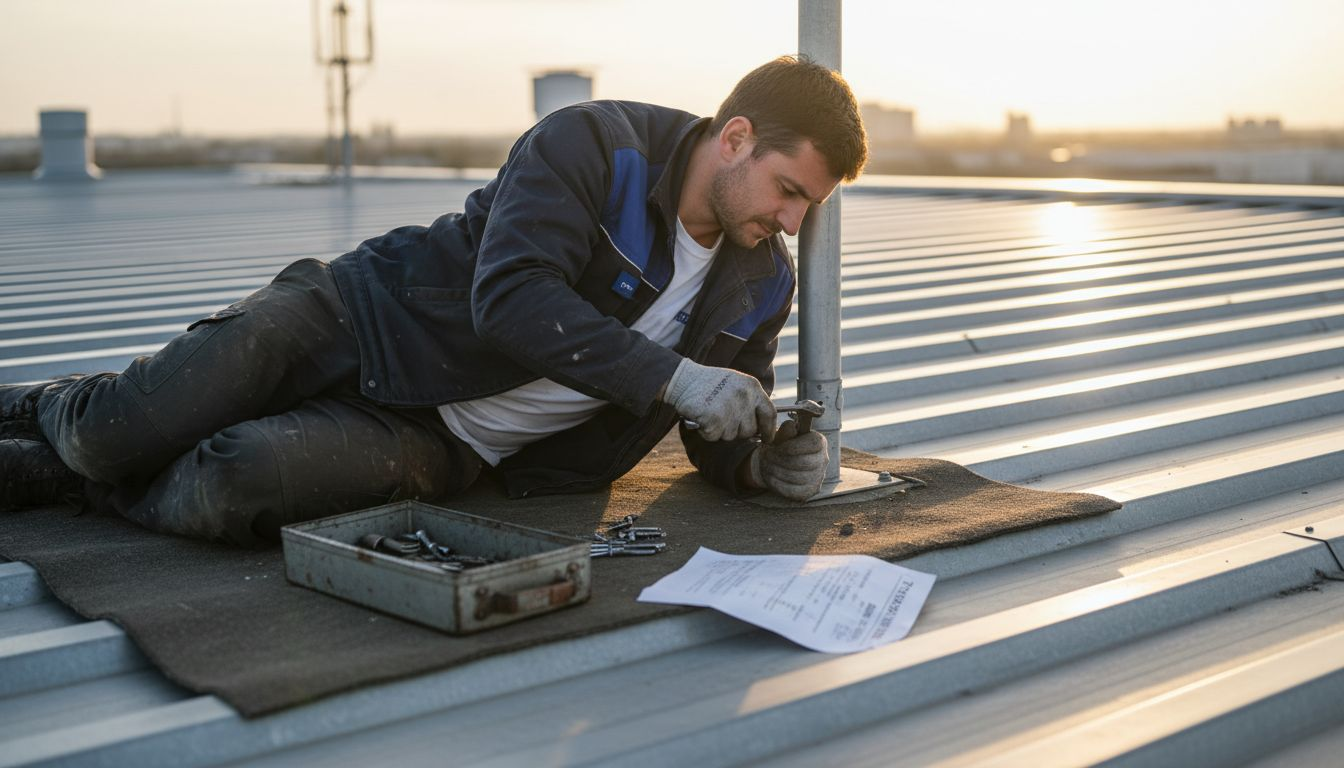
In fact, grounding is a critical point. Earthing rods must be driven to a depth appropriate for the local soil and the measured resistances. Aim for a ground resistance of less than 10 Ω according to standards, but your technical study will define the precise target for your site.
In this regard, once the mechanical installation is complete, integrate your connected monitoring system. You have three options:
- Install Rout@ir on-site, connect it to your network (Wi-Fi, Ethernet, or mobile data), and then register your devices in LPS Manager.
- Add Contact@ir MD directly to your lightning rods or meters for standalone cellular IoT monitoring.
- Deploy Test@ir for ad-hoc wired diagnostics if there is no permanent connectivity
In this context, registering equipment in LPS Manager simplifies the centralized management of your protection across all your sites. Each lightning rod, meter, and detector receives a unique identifier and automatically generates certificates and logs.
In other words, configuring alerts is crucial. Define the recipients (email, SMS, push notification) for lightning strikes, detected faults, and scheduled maintenance. LPS Manager allows you to manage these rules by site and by team.
In other words, test your installation before declaring it operational. Run a diagnostic via Dongl@ir or Rout@ir to validate that all communicating products are responding correctly. Also verify that alerts are being correctly sent to LPS Manager.
First, a well-documented and tested installation ensures regulatory compliance and responsiveness to lightning events.
Next, Pro Tip: Keep installation photos, earth test results, and the batch number of each piece of equipment in LPS Manager: this data facilitates audits, insurance claims, and future interventions.
Step 4: Verify functionality via tests and LPS Manager
Your installation is now in place. Next, verify that it is working correctly and implement a structured monitoring system. These checks will ensure that your protection system is functioning properly and remains compliant with standards.
Begin with initial testing. Run a diagnostic via Test@ir (wired) or Dongl@ir (wireless) to validate that each piece of equipment is responding correctly. Verify that lightning rods, meters, and detectors are communicating without errors. Record the results of these initial tests.
If you have deployed Rout@ir or Contact@ir MD , also test the data feed to LPS Manager. Confirm that alerts are received correctly and that the history is recorded. This step validates your complete monitoring chain.
Measure the resistance of your grounding system with a suitable multimeter. The value must comply with your technical specifications (generally < 10 Ω). Document this measurement; it will serve as a reference for future checks.
Once these tests are complete, schedule your periodic inspections. Regular inspections according to regulatory schedules ensure the long-term compliance of your installation. You must schedule:
- Annual visit : complete visual inspection of all accessible elements
- Annual soil test : resistance measurement to detect degradation
- Communicating diagnostics : verification of alerts and transmission via LPS Manager
- Post-impact intervention : thorough inspection after each recorded lightning strike
LPS Manager centralizes all this tracking. Create a maintenance calendar within the application, configure automatic reminders for each site, and generate compliance reports for your insurers and auditors. Each intervention is recorded with photos, measurements, and signatures.
When an impact is detected (via Compt@ir or Alert@ir XT), an alert is immediately sent to LPS Manager. You can then quickly schedule a post-impact check without waiting for the next annual maintenance.
A rigorous and documented verification transforms your protection into proof of compliance for insurance and inspections.
Archive your grounding test reports, installation photos, and certificates of authenticity in LPS Manager. These documents prove your due diligence in the event of a claim or regulatory audit.
Pro tip: Set up automatic email alerts in LPS Manager for each impact or defect detected, then create an internal escalation process: alert received → scheduled diagnosis within 48 hours → archived intervention report.
Find the ideal solution to protect your site against lightning with LPS FRANCE
Choosing a lightning protection system requires a rigorous analysis of specific needs and a selection tailored to current standards. If you want reliable, innovative, and easy-to-monitor protection , discover our complete range of communicating and non-communicating lightning rods, combined with advanced connected maintenance solutions.
LPS FRANCE supports you at every stage of the process with products made in France, designed to offer excellent durability and full regulatory compliance (IEC 62305, NF C 17-102). Thanks to our unique Contact@ir System and the LPS Manager , you can benefit from:
- From a precise and remote diagnosis of your equipment
- Real-time reporting of impact and defect alerts
- Centralized management of maintenance and historical data
To learn more about lightning and the differences between lightning rods and surge protectors, visit our LPS France Wiki . Get ahead of the curve in ensuring the safety of your facilities and explore our online store available at lpsfr.com/boutique . Take action today to guarantee optimal protection for your site.
Frequently Asked Questions
How can I identify the specific lightning protection needs of my site?
Start by analyzing your environment and infrastructure, such as location, climate, and building height. Document these characteristics to facilitate decisions regarding the type of lightning rod and accessories to install.
What standards should I consult when selecting a lightning protection system?
It is crucial to refer to standard NF C 17-102 and IEC 62305 to ensure compliance and choose the appropriate level of protection for the criticality of your site. Examine the specific requirements of sensitive facilities, such as hospitals or data centers.
What are the protection levels according to the IEC 62305 standard and how do you choose them?
The IEC 62305 standard classifies protection levels from I to IV, according to the criticality and risks associated with your site. Assess the criticality of your infrastructure to determine whether Level I or II is necessary, for example, for hospitals, or whether Level III or IV is appropriate.
How to install lightning protection equipment and integrate connected monitoring?
Ensure all equipment meets technical specifications before installation. Follow precise instructions for lightning rod placement and perform grounding according to the requirements of your technical study.
What checks should I carry out after installing lightning protection?
Perform initial tests, such as diagnostics using test devices, to validate the proper functioning of your equipment. Schedule regular checks to ensure compliance, including, for example, an annual earth resistance test.
How do I document and track the compliance of my lightning protection system?
Use a management system to archive test reports, installation photos, and certificates of authenticity. Ensure that every intervention is recorded with precise details to facilitate audits and insurance claims.